Bioethics Forum Essay
Can You See Everything? Bioethicists, Take Note
As someone who is relatively new to bioethics, I have noticed a few things. One is that people with a nonlinear career path sometimes bring a fresh perspective to a situation. In addition, it helps to ask good questions. Based on these observations, I suggest that we extend honorary membership in our ranks to the filmmaker Nathan Fielder.
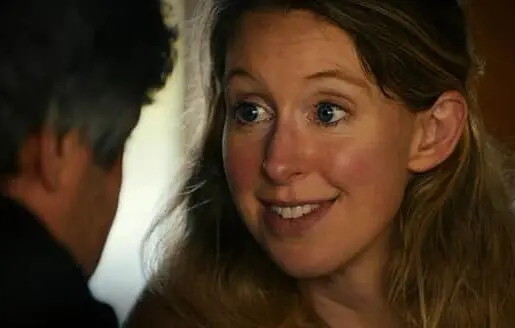
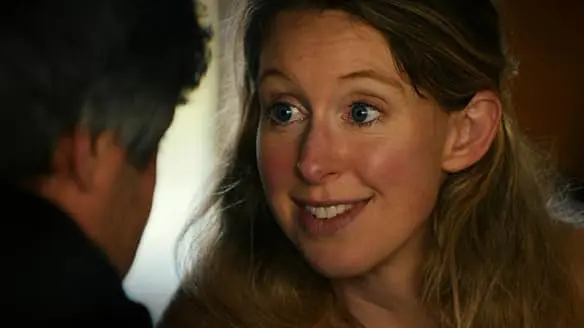
Fielder has brought an important part of bioethics to the masses: wordsmithing. In You Can See Everything, the documentary he co-directed with Lance Oppenheim, the subject is Elizabeth Holmes of Theranos infamy. After 15 years at the helm of a company purported to provide innovative low-volume blood tests, Holmes was found guilty of conspiracy to defraud investors and of wire fraud and was sentenced to over 11 years in federal prison. Approximately one month before her sentence was to begin, Holmes and her boyfriend invited Fielder to move in with them and examine their story.
The film probes the distance between what Holmes says and means and what other people understand. From the edge of my seat in the theater, I saw analogies in my own experience with bioethics and genomics research.
The film shows Holmes insisting that the machines her company built “can” run any blood test. With some tense back and forth, Fielder teases out that what Holmes likely means is that the machine “could” run any blood test if that test and the associated chemistry existed.
Pushing the point further, Fielder shows Abbott and Costello’s classic routine “Who’s on First?” The crux of that bit is that a baseball player named “Who” is on first base. Abbott knows this, but Costello does not.
Costello: “Who’s on first?”
Abbott: “Who’s on first.”
I found myself wondering what my colleagues in research ethics would think. As a co-investigator in the Human Pangenome Reference Consortium, which is building a new resource of genetic data and, eventually, biospecimens that more comprehensively represent human genetic diversity, I have noticed some “Who’s on First?”-isms in the language we use to describe research participants and the specimens and data they provide.
First, at the Global Alliance for Genomics and Health annual meeting held recently in Singapore, a colleague from Singapore made a presentation that identified some of the people who had been recruited as “Indian.” An audience member from India asked, “What ethnicity are the participants?”
Presenter: “Chinese, Malay, and Indian.”
Audience member: “Yes, which ethnicities do you have?”
Presenter: “Those are the ethnicities.”
Audience member: “Yes, but what are the ethnicities?”
In the presenter’s classification, the ethnicities were Chinese, Malay, and Indian. Those categories are familiar in Singapore’s official statistics, which also recognize more detailed ethnic groups. But to the conference attendee, “Indian” did not provide the level of detail he was asking for.
Second, in preparation for the collection of papers around our release of pangenomic data, the ethics team of the Human Pangenome Reference Consortium has considered the imprecision of the use of the word “sample”.
Take, for instance, the International Genome Sample Resource, or IGSR. This resource maintains publicly available genomic data from the 1,000 Genomes Project and other initiatives. Many of the corresponding physical materials, including cell lines and DNA, are held and distributed by the Coriell Institute for Medical Research. IGSR’s website links researchers to the data, while Coriell’s sample catalogue points to the associated cell lines. Both resources state that they have samples, but one resource has sequence data and the other has biospecimens.
Which kind of sample a researcher obtains also has legal ramifications. Consider a hypothetical conversation in which someone asks whether GDPR, the European Union’s data protection law, permits sharing “the samples.” Is the person talking about sending someone a tube of DNA or cells (to which GDPR would not pertain) or giving them access to a file of DNA sequences (which may be subject to GDPR)? To answer the question about permission or indeed lawfulness, we need to establish what is being shared.
To help rectify the situation in genomics research, some colleagues and I are working on a paper, under revision, that aims to help scientists speak and write more clearly about participants, specimens, and data. Before we agree on a scientific matter, like “a population is represented through a sample that is available,” we should establish what those words mean to the people in the conversation. As honorary bioethicist, Nathan Fielder shows us that while you can see everything, it doesn’t mean that you do.
Jonathan LoTempio, Jr., PhD, is an assistant professor of pediatrics and biological chemistry and the associate director of translational bioethics at the University of California, Irvine, School of Medicine. LinkedIn Jonathanlotempio, Bluesky realjlo.bsky.social