Bioethics Forum Essay
Seeing the Human Being: Avi Sagi, Medicine, and the Moral Danger of Invisibility
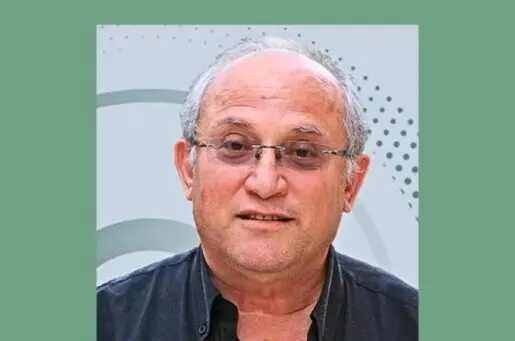
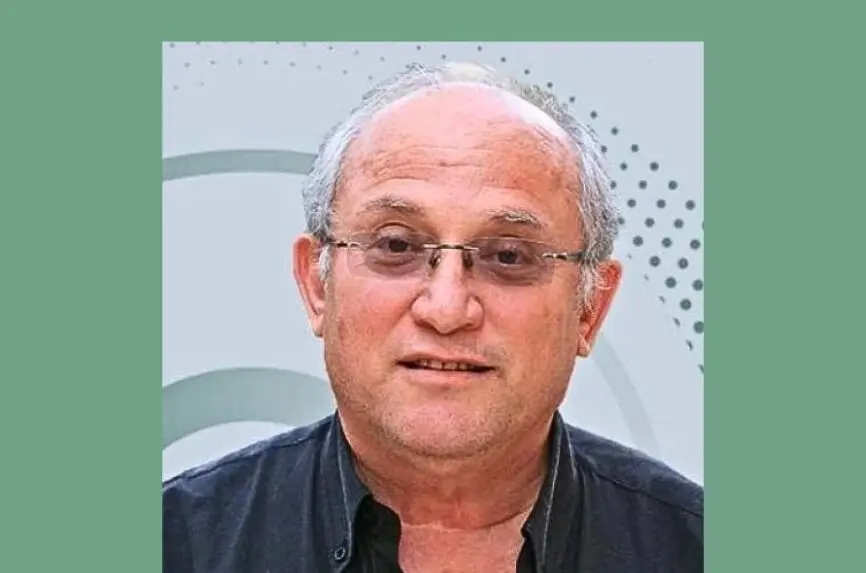
Avi Sagi was one of Israel’s most prominent philosophers and public intellectuals. Until his sudden death in July, his work addressed ethics and the moral tensions inherent in Israeli society. He brought abstract ethical questions into everyday life: How do we see another person and respond to his or her suffering? What happens when human beings are reduced to categories?
For clinicians, these questions are not abstract.
Medicine depends on an ethical imperative of seeing. A physician must encounter the person before them first as a human being who is vulnerable, frightened, suffering, and deserving of care. Identity is not irrelevant; culture, language, religion, and social circumstances profoundly affect health and illness. But they must never eclipse the humanity of the patient.
In Israeli hospitals, this principle is tested under extreme conditions. Jewish and Arab physicians, nurses, and other health professionals routinely work side by side. During episodes of terrorism and war, hospitals may receive victims of an attack and the person suspected of carrying it out, sometimes in the same emergency department. The ethical obligation of the medical team persists in such moments. Clinical urgency, not moral judgment, determines who is treated first.
This is one of medicine’s most demanding moral commitments. Clinicians may feel anger, fear, or grief, or identify with a particular patient or group. Yet anyone lying on a stretcher must be seen as a patient. Providing care does not erase violence and wrongdoing or imply political neutrality. Medicine refuses to make a person’s humanity conditional on identity, allegiance, or moral worth.
The clinical encounter can interrupt the process of reducing a person to an identity or category. The injured person, the frightened parent, and the child struggling to breathe – they all make an immediate moral claim upon us.
Yet medicine is not immune to the erosion of empathy. Health professionals live within society. They absorb its fears, anger, grief, prejudices, and political narratives. When public discourse becomes saturated with dehumanization, clinicians cannot assume that the hospital remains untouched. The loss of empathy in society can seep into the medical community, influencing language, attention, compassion, and eventually action.
This is the reason Prof. Sagi’s warning matters for bioethics: Indifference to the suffering of others may change who we become.
Recognition of the other does not require erasing differences. One can acknowledge conflict and moral responsibility while refusing to deny the humanity of those on the other side. Caring for a patient does not mean agreeing with, absolving, or forgetting what that person may have done. It means refusing to participate in dehumanization.
I had the privilege of discussing ethical dilemmas confronting Israeli physicians and society with Prof. Sagi.
Over time, he became a source of moral guidance and inspiration for Bo’u, an initiative of Israeli health professionals that I co-founded during the hostage crisis to advocate for the release of hostages held in Gaza and raise awareness of their suffering. Bo’u continues to work toward building a more humane and values-based future for Israeli society. Prof. Sagi’s thoughtful counsel helped us navigate difficult ethical questions, particularly the obligation to recognize the humanity of others, even amid conflict.
Only days before he died, he sent me the manuscript from which the passages below are taken and asked me to help bring it to readers. His final essay asks whether societies can preserve the discipline of recognition outside the walls of the hospital.
Selections from “Removing the Barbed-Wire Fences” by Avi Sagi
We see the other from within the Platonic cave we inhabit. Otherness no longer appears as another form of human existence, but as a marker of someone who does not belong to “us.” The other is perceived as a stranger who threatens our existence. Fixing a person in the category of “other” makes that person invisible. The other no longer exists for their own sake, but only as they appear in our eyes. Personal identity is erased and replaced by another act of identification, reducing an entire human existence to a single category: Jew, Palestinian, ultra-Orthodox, secular. The stronger the identification, the greater the distance. The face is no longer seen, and the voice is no longer heard.
_____
How can this barrier to seeing and hearing the other be broken? In my view, literary testimony has a unique power to do so. Literature is the crack that breaks through the existing order. It allows the human being beyond the categories of identity to reappear. It returns to consciousness the face of the person who has been swallowed behind the distinction between “us” and “them.” A moving expression of this can be found in Sama Hassan’s monumental book, Amid the Ruins (Van Leer Institute Press and Dar Laila, 2025). Hassan is a writer from Gaza, yet her writing transcends the concrete events and penetrates to the heart of our shared humanity. She crosses the boundary between “them” and “us” and allows the human being to be seen again as human.
Here is one fragment:
“For three consecutive days, the father bent over the ruins of the family home and never stopped speaking to his daughter about hope. At the same time, trapped beneath the rubble, she spoke to him about death, until her voice fell silent.” (p. 21)
This fragment confronts hope with death. The father is no longer only a Palestinian father; he is a father as such. The daughter is no longer only a Palestinian daughter; she is every possible daughter. The text thereby unsettles the distinction between Palestinian and Jew, and between those involved in the conflict and those who are not. Humanity shines through in all its fragility. This fragment could also have been written about a Jewish father and his daughter, because it expresses a shared humanity that precedes every distinction between identities.
This is the human covenant that precedes every national, religious, or political affiliation. Through this human covenant, differences may be overcome enough to open the gates of the heart, compassion, and empathy. The encounter between father and daughter deepens the fragment’s meaning. Hope belongs to the father, while death belongs to the daughter. Children ordinarily symbolize the future and the possibility not yet realized. They carry the promise of life. Parents, by contrast, are already moving toward their own death. Yet in this fragment, the human order is reversed. The daughter represents death — the death of the future — while the older father carries hope.
Hope is not merely an expectation of a future that will arrive. It is a way of taking a human stand within the present. It is fidelity to the human being even where the future itself is shaken. This is a primordial hope, one that does not rest on the probability of success and is not conditioned on outcomes. The daughter’s death is not necessarily the death of hope. Yet even when hope continues to exist, it carries grief and darkness within it.
_____
Anyone entering the heterotopic space of a hospital will see that this covenant exists there in its simplest form. There, the distinctions that organize our world become weaker, and shared human vulnerability is revealed in their place. Recognition of pain and of the fragility of life opens the heart and allows us to see what the screens had concealed.
But if this work of repair does not take place, the damage will not remain confined to the public sphere. It will seep into our intimate world as well. What a person does to another returns and acts upon that person. The violation of the other’s humanity gradually becomes a violation of one’s own humanity.
Sama Hassan writes:
“The killing soldier returned from the battlefield after repeatedly attacking uninvolved civilians and tried to embrace his beloved in his arms . . . but she pushed him away, because she felt that he was surrounding her with barbed wire.” (p. 24)
We know that harming the other — including the Palestinian other — creates trauma. This trauma does not spare the person who inflicts the harm. A human being may confront it in one of two ways. The first is to deny the humanity of the other and turn the other into a demon. When a person ceases to see the other as human, the other is reduced to an image that confirms and justifies one’s actions. Yet this denial does not stop with the other. It returns and acts upon the person who created it. Whoever denies the humanity of another gradually empties their own humanity as well.
The second path is to recognize the danger inherent in the loss of humanity and to struggle continuously not to surrender to it. This is the struggle in which Sama Hassan invites her readers to take part. Her delicate writing neither preaches nor judges. It places us before the deepest moment of decision: Will we relinquish our humanity, or will we fight for it?
The wire does not remain at the border. It penetrates the human embrace. Harm to the other seeps into the possibility of closeness, trust, and love. The barbed-wire fence that separated “us” from “them” now encircles the inner life of the individual as well. It deprives a person of the possibility of truly loving, because violence does not know how to remain confined to one sphere.
_____
We who live here in Israel stand at one of the most difficult moments of moral testing in our existence as human beings. The question is not only how we will treat the other, but also what kind of human beings we will become. Will we close our hearts and wrap ourselves in blood and revenge, which will ultimately wound the person holding the sword? Or will we choose humanity even when that choice demands courage?
If we choose humanity, the screens will begin to crack, and the barbed-wire fences we have erected between ourselves and others will gradually lose their power. The face of the other will become visible again, the voice of the other will once more be heard, and the human covenant — which precedes every distinction between “us” and “them” — will again become the foundation of our shared life.
Israel Amirav, MD, is an adjunct professor of pediatrics at the University of Alberta in Canada and a pediatric pulmonologist at Dana-Dwek Children’s Hospital, Tel Aviv Sourasky Medical Center (Ichilov), and Tel Aviv University, Israel. He is a co-founder of Bo’u, an initiative of Israeli health professionals that promotes civic responsibility, human dignity, and a more humane Israeli society.