Bioethics Forum Essay
Lethal Injection: America’s Unethical Answer to an Unethical Punishment
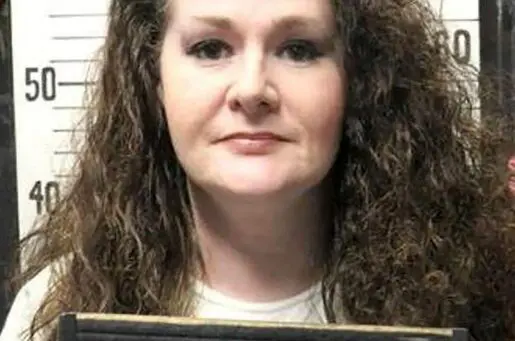
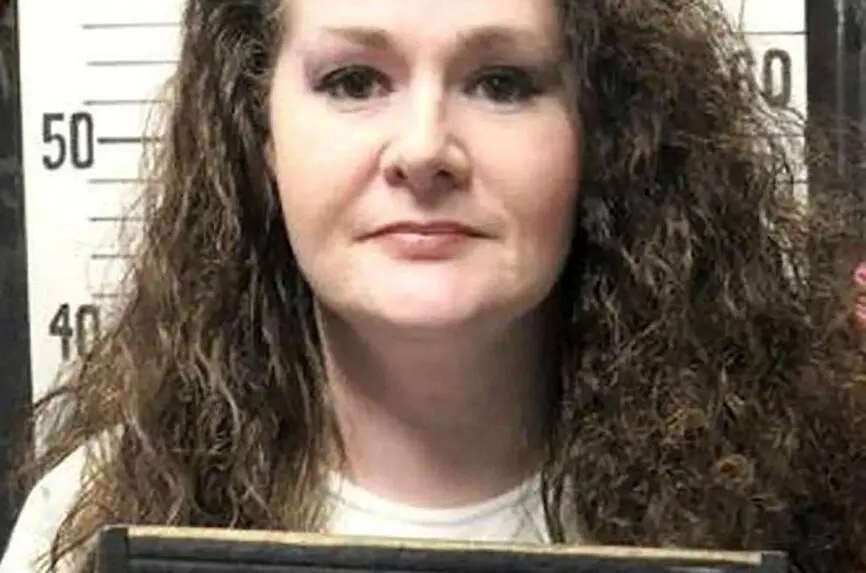
For months, Christa Pike and her attorneys worried that a lethal injection could go wrong, so they challenged Tennessee’s capital punishment protocols but ultimately lost. After the state’s botched attempt to execute Pike on September 30, she is now in critical condition and receiving life-saving medical care after two doses of pentobarbital failed to end her life. This case makes morbid history as the first time a prisoner has “survived the administration of lethal injection drugs.” Tennessee also had difficulty performing lethal injection earlier this year, when Tony Carruthers was punctured more than a dozen times while medical personnel were trying to establish an IV line. Carruthers is under a one-year reprieve, moving his scheduled execution date to May 21, 2027.
Pike’s lawyers are now calling on Tennessee Governor Bill Lee to commute her sentence to life in prison. Lee has placed a moratorium on executions through the end of the calendar year and launched an investigation.
The death penalty is currently legal in 27 states (though paused in some). Lethal injection is the dominant form of capital punishment in the United States. It is usually conducted as a three-drug cocktail (an anesthetic or sedative, a neuromuscular blocker, and a cardiac agent), but several states have experimented with single drug injections (cardiac agent alone). Over the last few years, the drugs used for execution have been difficult for states to get, with many overseas manufacturers refusing to sell their products for this purpose. Thus, some states have reached into history to find solutions, including the use of firing squads (in South Carolina, Idaho, Oklahoma, Utah, and Mississippi), the electric chair (in nine states), and hanging (legal in New Hampshire, though not used since 1939).
These other methods are often unpleasant for witnesses, which has led some states to try new methods to kill inmates. In 2015, Oklahoma was the first state to permit the use of nitrogen hypoxia (suffocating a person by replacing oxygen in the air with nitrogen), but the first execution from this method was in Alabama (2024). The execution of Kenneth Smith was unsettling: Smith reportedly writhed and shook on the gurney and pulled on his restraints. It took 22 minutes before Smith was pronounced dead after administration of nitrogen. Such disturbing facts suggest that execution via nitrogen hypoxia may be a violation of ethical norms and constitutional rights, including the 8th Amendment of the U.S. Constitution’s prohibition on “cruel and unusual punishment.” Despite these concerns, five states permit this approach (Alabama, Arkansas, Louisiana, Oklahoma, and Mississippi). The untested and novel nature of nitrogen hypoxia as a method of execution raises questions about whether the procedure can be conducted humanely.
Several medical ethics scholars and institutions have pushed back – both in formal statements (the AMA wrote an amicus brief in 2018) and in blogs. In his 2014 Hastings Center Report article , Sean Philpot questioned whether alternative methods of execution essentially equate to conducting research without informed consent or the right of refusal. One of us explored the ethics of execution in a 2017 Bioethics Today blog post and whether physicians should be involved with it (in most jurisdictions and under the AMA Code of Ethics, they should not). In part, participating in an execution (assessing that the inmate is healthy enough to proceed, placing IV access, taking vitals, declaring death) is a conflict of interest in a profession dedicated to preserving life.
Additionally, in the case of Pike, when she did not die from the injection, physicians were then obligated to save her life. We are concerned about the predicament the healthcare workers are placed in.
Christa Pike is now in critical condition at Vanderbilt University Medical Center. Healthcare professionals are working hard to save her life. But why? So that the state can make another attempt to kill her? Perhaps the more humane action would be to let her die in palliative care instead of ensuring that she is healthy enough to be executed.
In 2018, one of us stated, “The ethics of the death penalty are clear — taking a life in punishment for murder is not justice, but vengeance. One does not right a wrong by creating another wrong. The usual excuse for executions, that they are a ‘deterrent’, has been proven untrue, time and time again.” State laws may have changed, legal interpretations in some places may have changed, but the ethics remain the same. Pike should not face the needle again and human morality requires that we cease this barbaric practice.
Disclosure: The opinions expressed in this piece are those of the author and are not reflective of any views or policy of the American Medical Association
Scott Schweikart, JD, MBE, is a senior policy analyst at the American Medical Association. LinkedIn scott-schweikard-jd-mbe, @scottschweikart.bsky.social
Lynette Martins, LLB, PGDip, MBE, LLM, is the Jharis Faculty Fellow in Health Law and Intellectual Property at DePaul University College of Law and an adjunct professor of law at Georgetown University Law Center. LinkedIn lynette-c-b, @lynettemartins.bsky.social
Craig Klugman, PhD, is the Vincent de Paul Professor of Bioethics and Health Humanities at DePaul University. LinkedIn craig-klugman, X @CraigKlugman, @profcraig.bsky.social