Bioethics Forum Essay
Beep-Beep! It’s Bioethics!
Do research ethics rules apply in the Looney Tunes universe?
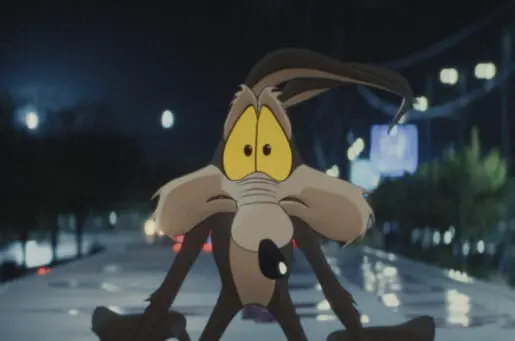
I’m not talking about the looney political universe we seem to be in now, but the one created by the mid-century cartoonists who gave us such memorable characters as (in alphabetical order), Tweety Bird, Bugs Bunny, Elmer Fudd, Foghorn Leghorn, and Porky Pig. These and other otherworldly figures of fun made an appearance in the surprise late-summer 2026 hit Coyote vs. Acme, a hybrid live-action cartoon inspired by humorist Ian Frazier’s 1990 New Yorker magazine article.
I didn’t expect the film to confront me with questions about research ethics, informed consent, and harms to research participants any more than Wile E. Coyote expected those rocket shoes to drag him over a cliff.
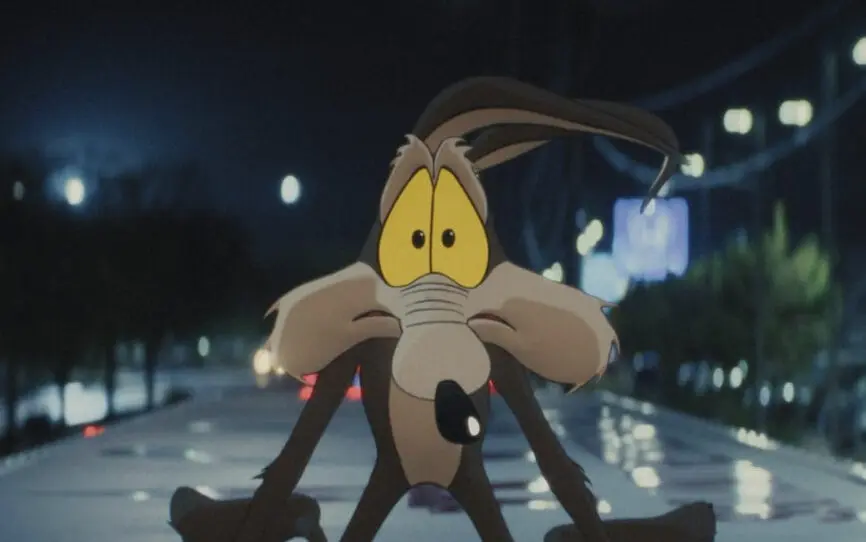
The film’s premise should bemuse plaintiff’s attorneys: After decades of catastrophic failures using various products in his ravenous effort to catch and consume the Road Runner, the befuddled, ironically named Wile E. hits upon a scheme to sue, on grounds of product liability, the industrial giant that produces these defective devices. After all, the coyote has died a thousand deaths, often several in the same seven minutes. On the furry face of it this is a credible plaintiff.
In a cinema summer marked by the ponderous heavy hitter, The Odyssey, and yet another offering in the timeworn Spiderman franchise (I owned the first issue of the comic book until my mother threw it out), this homage to Boomer-era Saturday morning TV was an offbeat and refreshing departure, one that almost wasn’t released, reportedly due to MGM’s doubts about profitability. I can understand the hesitation; after all, a feature-length cartoon that raises questions about metaphysics and moral philosophy, not to mention the colonization of the Tuniverse by corporate greed, has got to be a loser. You might have missed a couple of these themes while you were refiling your jumbo popcorn.
(Just so you know, there are spoilers ahead.)
After the closing credits I considered the universality of research ethics. One of the shocking conclusions of the mystery behind Acme’s disregard for Wile E.’s well-being is that he and apparently others in his cosmic domain have been exploited as unconsented research subjects to sort out the defects in their products before releasing them to paying customers. This scenario is uncomfortably close to the way things have too- often worked, but with creatures who are not animated in the cartoon sense. I found it satisfying that it was the bioethics, not the law, that finally brought Acme down by disclosing that all those damaged cartoon characters were being systematically manipulated by an invisible, distant corporate empire without the benefit of IRB review. (Mark Zuckerberg, take note.)
Live action cartoons charmingly fudge possible worlds. Students of the philosopher Leibniz have pondered the status of facts that happen not to be part of the actual world. The actual world is the one that Wittgenstein claimed must be the one represented by the totality of true statements. (“The world is all that is the case,” he famously wrote.) But some statements are true in many worlds. For example, by the end of the movie I found it eminently plausible that Elmer Fudd is a powerful United States senator in every possible world.
But I digress.
One question more suitable to moral psychologists than philosophers is why so many of us find ourselves somewhat sympathizing with Wile E. and can appreciate his frustration every time he is crushed by an anvil or magnetized into a speeding locomotive. He is an underdog with a name, but the Road Runner is nameless. Perhaps it’s because we know Wile E. will fail that we feel free to identify with him. In truth, the pathetic Wile E. is anything but wily. Has the cartoon coyote exposed the deep roots of our insecurities, of our will to fail? Does an immoral intent not matter as long as the Road Runner always happily speeds into the horizon, leaving Wile E. in the dust? Has this trivial cartoon exposed us all as latent consequentialists? Can it be that the coyote’s evil intentions don’t matter as long as the Road Runner survives his nemesis’ latest failed attempt at treachery? Is this the last in a series of rhetorical questions?
Leaving aside the fact that Wile E.’s whole endeavor is ultimately about a tasty Road Runner stew, the emotional climax of the film is a celebration of his heroic persistence along the lines of Sisyphus. I hope this revelation sends 12-year-olds to Camus rather than Claude.
But there is a crucial difference: Sisyphus is alone with his boulder, whereas the coyote is in an eternal folie a deux with the Road Runner. If you’re going to be forever frustrated, it’s better not to be alone. At least they have each other.
Beep-beep!
Jonathan D. Moreno is an emeritus professor at the University of Pennsylvania, a Hastings Center Fellow, and a frustrated cartoonist.
[Photo by Warner Bros./Courtesy of Ketchup Entertainment]