Bioethics Forum Essay
Dear Kalshi: Stay out of Biopharma
Prediction market platforms, which for years have enabled people to bet on politics, sports, and economic outcomes, are now moving into the biopharmaceutical space, allowing users to bet on questions like whether a clinical trial will meet its primary outcome or whether the Food and Drug Administration will approve a drug by a given deadline.
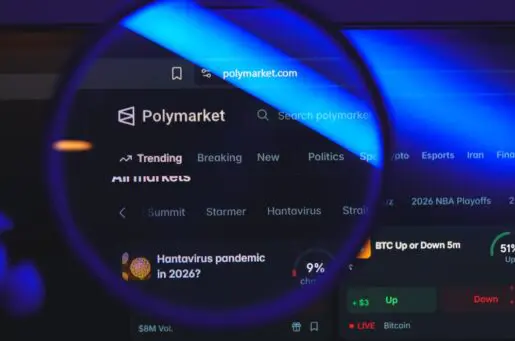
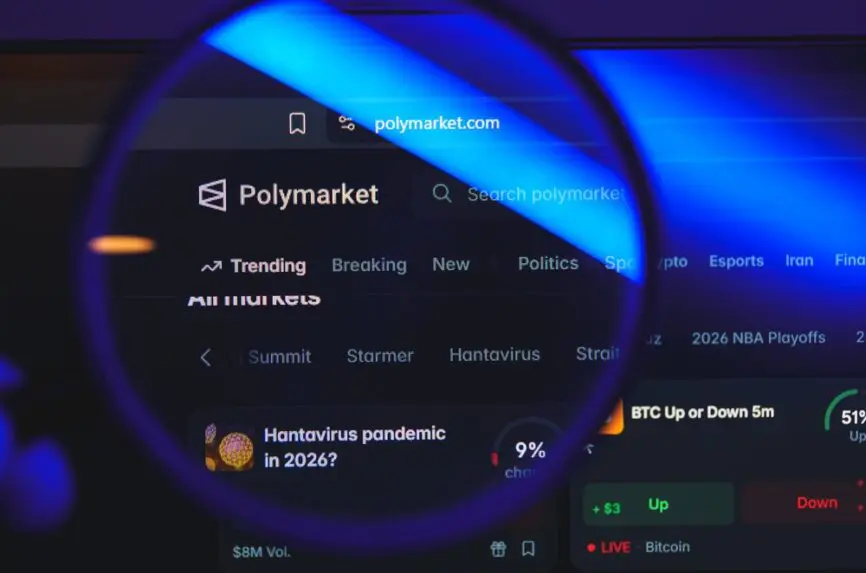
One prediction market, Kalshi, recently announced its foray into the world of biotech. Another popular platform, Polymarket, lists multiple contracts related to biotech development and FDA approvals alongside its usual bets on sports and politics. And a recently launched pilot program called Endpoint Arena focuses exclusively on public forecasting of clinical trial results.
Are the outcomes of clinical research or regulatory decisions really commodities that we should allow public trading on? Is there any good reason for creating these markets at all?
According to a recent report published by Kalshi and the data infrastructure company AppliedXL, the goal of biopharma prediction markets is to democratize access to important information about the drug development process. The report argues that the current model of pharmaceutical research and development creates a problematic “two-tier information system.” In this system, large companies consult internally with industry experts to generate proprietary probability of success estimates, which inform their research priorities and guide strategic resource allocation decisions. These valuable insights are expensive to produce and thus carefully guarded by industry, creating an informational chasm between “large institutions with the resources to assemble private probability estimates on one side, and smaller investors, researchers, physicians, patient advocates, and journalists working from press releases and public filings on the other.”
This asymmetry is a genuine problem. In the world of pharmaceutical research and development, information has monetary value and, unsurprisingly, for-profit companies are reticent to share it. What’s more, the information that companies do share is frequently given a positive spin to sustain investor support and public enthusiasm, which can make it difficult for stakeholders to accurately evaluate the evidence. This lack of transparency and commercial bias in reporting can significantly undermine public trust in scientific findings. Thus, Kalshi’s professed goal of improving the transparency and accessibility of scientific information is worthwhile.
But the argument that public probability markets will increase the transparency and accessibility of scientific information hinges upon a crucial assumption: that the aggregate of public opinion—i.e., online bets—will reflect a collection of well-informed, well-reasoned perspectives.
There is no reason to believe this will be the case.
While Kalshi has explicit exclusion criteria specifying which types of users are not permitted to cast bets in biopharma prediction markets—such as trial investigators, sponsor employees, subcontracted contract research organization personnel, FDA staff, and any other individual who might possess material proprietary information that could be used for insider trading—there is no inclusion criteria regarding who can bet on biopharma prediction markets. The question of who exactly will be casting the bets that comprise “public opinion” remains unanswered.
A related question is what type or level of expertise a user must possess to be considered a reliable source of prediction. In an interview with The New York Times, Kalshi spokesperson Kyle Such said that users with “sophisticated scientific knowledge but no inside information, such as a retired physician, a medical student or even an avid learner, would be best suited to make informed predictions.” However, given that biomedical research is often highly specialized, having a medical degree or research experience does not necessarily impart an individual with the kind of granular expertise necessary to inform predictions over a specific trial. When it comes to regulatory expertise, ongoing staffing changes and inconsistent messaging from the FDA under the current administration have made it difficult for even agency employees themselves to predict how the FDA will proceed in any given case.
Kalshi’s report also seems to assume that people who are not experts will be disinclined to cast bets on biopharma contracts because of the risk of losing money. However, given the growing problem of gambling addiction in the United States—which has been exacerbated by the legalization of online sports betting platforms and prediction markets—it seems reasonable to expect that there will be users on Kalshi and other prediction market platforms who bet on biopharma contracts not from a position of expertise but one of addiction.
The inability to identify exactly who is casting bets on these contracts significantly undermines Kalshi’s claim about collective expertise. In fact, Kalshi does not even display the number of individual bettors on each contract; the platform only shows the total number of bets placed (“trading volume”). While there are limitations on how many contracts an individual user can purchase at once—opening trades are limited to $3,000 a day—a high trading volume could reflect the activity of a few well-resourced bettors rather than a large number of users. If the crowd consists of only a few bettors with cash to burn, then the purported wisdom reflected by the market becomes even more suspect. Consequentially, Kalshi’s argument for the positive value of biopharma prediction markets falls apart.
The issues discussed thus far are not just abstract design flaws; they entail pragmatic ethical concerns. Information enables action and, if truly considered a viable source of information, the public probabilities generated on Kalshi could impact consequential stakeholder decisions. In fact, this is precisely the role Kalshi envisions for biopharma prediction markets. Its report outlines several groups who might benefit from consulting public probabilities, including pharma and biotech strategy teams, patients and rare disease communities, and clinician-researchers.
Regarding pharmaceutical companies, the report states that discrepancies between external public probabilities and internal probability of success estimates could signal “a program that warrants reexamination before additional capital is committed” and thus result in “capital reallocating away from failing programs earlier and concentrating on stronger candidates sooner.” For patients and patient advocates, the report claims that prediction markets can raise awareness of the current landscape of clinical research and “help make a complex, jargon-heavy field more legible to the people most affected by it.” And for clinicians with patients participating in clinical trials, the authors contend that public probabilities may “add a dimension to clinical judgment without replacing it, since a trial priced at 70% probability of success is a different prospect than one at 20% even when the sponsor sounds equally confident about both.”
Given that the accuracy of information reflected by biopharma prediction markets is highly suspect, the possibility of basing research or clinical decisions on these signals is deeply concerning. A recent editorial in Science provides a cogent synopsis of just how much is at stake: “A late-stage trial consumes years, public and private money, and thousands of volunteers; a market that biases it squanders all of that, misleads regulators and prescribers, and erodes the trust on which future enrollment depends.”
The proliferation of biopharma prediction markets will only amplify these concerns. As such, my request to Kalshi—and Polymarket, Endpoint Arena, and any other tech entrepreneur toying with ideas for the next hot-topic prediction market domain—is simple: Stay out of biopharma.
Faith Wershba, HBSc, MPhil, is a project manager and research assistant at The Hastings Center. www.linkedin.com/in/faithwershba
This essay was selected as a recipient of The Hastings Center’s David Roscoe Fund for Early-Career Essays on Ethics, AI, and Other Emerging Technologies.