Bioethics Forum Essay
Off Target: Reporting on Human Embryo Gene Editing
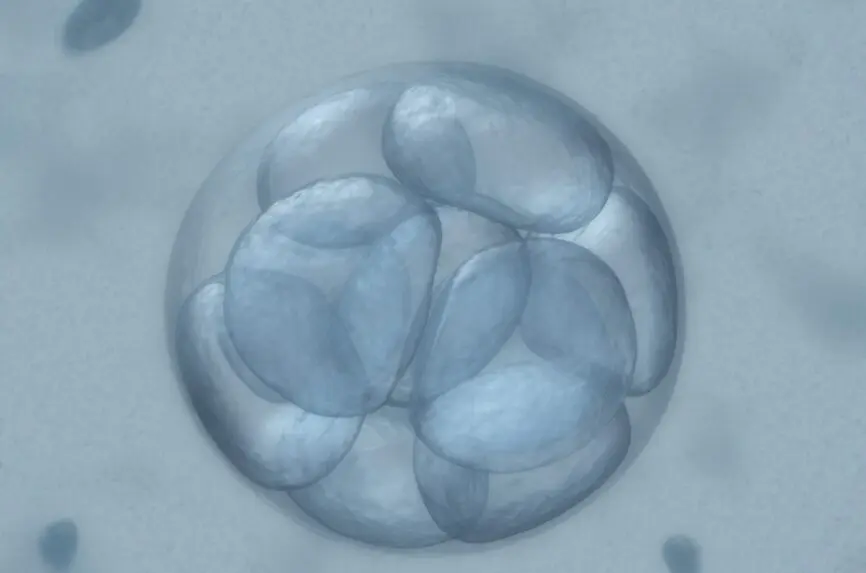
Major news outlets recently reported – based on a bioRxiv preprint – that scientists had edited genes in human embryos with “startling precision.” The scientists’ decision to release this work ahead of peer review, coupled with the extensive media coverage, raises ethical concerns because it risks making disruptive gene-editing technology appear safer and more inevitable than the evidence supports. It also contributes to the normalization of a tool that may be used more for human enhancement than treatment of serious diseases.
Previous attempts to use CRISPR/Cas9 gene editing in human embryos frequently resulted in chromosomal abnormalities and off-target changes, posing major barriers to the safety and efficacy of heritable genome editing. In their preprint, Dieter Egli and colleagues reported on a gene editing approach called base editing that they used to modify disease risk. Their approach reduced chromosomal abnormalities, but off-target changes remained.
Scientists share preprints prior to peer review to accelerate scientific exchange. Posting on preprint servers was widely adopted for the rapid dissemination and communication of Covid-19 research. However, short-circuiting the peer-review process also has risks: The findings may be unreliable, unreproducible, and/or lead to inaccurate media coverage. While imperfect, peer review remains a critical checkpoint before preliminary claims about efficacy and precision harden into public narratives of safety, progress, and inevitability.
That hardening is already happening with the new embryo gene editing protocol. Media outlets have described it as enabling meticulous and precise gene editing in embryos. Such language implies that heritable human genome editing is – or soon will be – safe. But the preprint and the authors do not support that conclusion.
At most, the preprint presents evidence that base editing may avoid the large-scale chromosomal abnormalities previously reported with CRISPR/Cas9 editing. But off-target edits as well as mosaicism, meaning that not all cells in the embryo carried the intended edit, remain. Because the authors used an off-target detection method that is not the most sensitive available, the full extent of unintended edits remains uncertain. And because the preprint did not undergo peer review, outside experts have not had the opportunity to challenge the findings or ask for additional experiments if needed. This research is not a demonstration of safety; it is an incremental step, and a reminder of how much uncertainty remains.
A preprint on an incremental improvement in gene editing human embryos may be less about the safety claims and more about whetting public appetite, normalizing enhancement, and signaling to potential investors. For decades, the bioethics community has expressed concerns about the boundaries between treating disease and enhancement. The number of cases in which embryo editing would be clinically necessary is likely small. One case involves prospective parents with the same recessive condition – such as sickle cell disease – who cannot produce unaffected embryos through IVF and genetic testing alone.
Increasingly, however, investment in embryo editing technologies comes from companies and individuals who are openly interested in what they call optimization – whether framed as maximizing health potential, such as reducing risk for complex conditions like heart disease, or as enhancement of nonhealth traits, such as intelligence or height.
Context matters: The company supporting the next phase of Egli’s research, Nucleus Genomics, is known for its “have a better baby” subway advertisements. Whether enhancement, let alone optimization, is achievable given the gene-gene interactions that we do not yet understand and the gene-environment interactions that are often beyond one’s control, is irrelevant. Snake oil has been profitable for years.
Assertions about the safety of human embryo gene editing are not just scientific claims; they are a doorway to normalization of a disruptive technology that raises immense ethical, social, and legal implications. International summits have all called for broad public deliberation and strict guidelines, but only a few countries have placed restrictions on the science and the scientists.
Disturbingly, scientists developing these technologies often treat the ethical implications as downstream concerns. In the final paragraph of their preprint’s discussion, Egli and colleagues write: “Others have highlighted various ethical questions associated with heritable gene editing. We expect that the data provided here will contribute to the conversations surrounding the risks and benefits of embryo editing.” However, they sidestep the issues, suggesting that their work is value-neutral.
But science is not, and has never been, value-neutral or divorced from ethics. Work that makes multigene editing in embryos more feasible also helps make thinkable a future in which polygenic traits are treated as targets for genetic engineering. Scientists cannot build the tools for genetic optimization and then pretend they are merely bystanders to what comes next.
Emily Packard Dawson, PhD, is a postdoctoral research fellow in Michigan Bioethics and the Department of Obstetrics and Gynecology at the University of Michigan Medical School. LinkedIn: Emily Packard Dawson
Lainie Friedman Ross, MD, PhD, is the Mark and Lois Taubman Distinguished Professor of Health Humanities and Bioethics, the inaugural chair of the Department of Health Humanities and Bioethics, and the director of the Paul M Schyve MD Center for Bioethics at the University of Rochester. LinkedIn: Lainie Ross