Bioethics Forum Essay
50 Years After Quinlan: The Woman Who Changed American Medicine
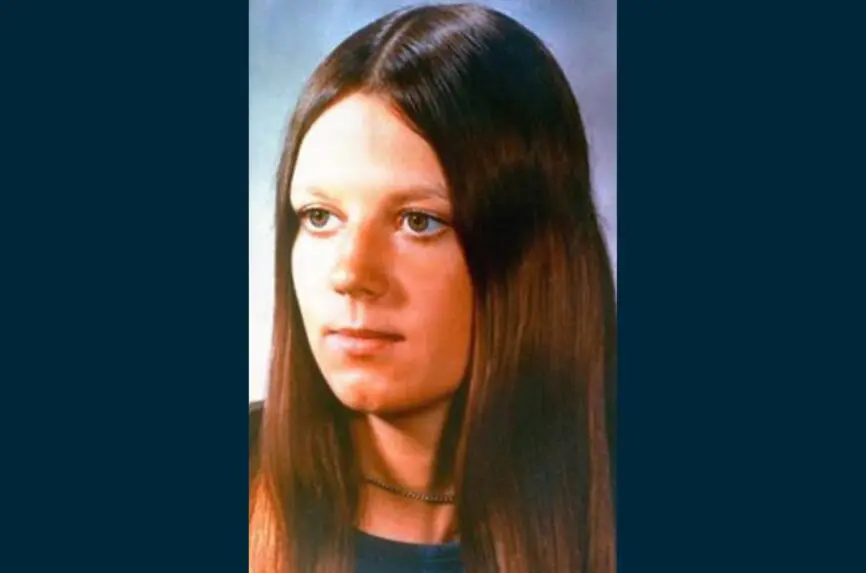
Springtime 1976 in America: While the country was preparing for its 200th birthday celebrations, one of the most significant hospital culture shifts was happening in the New Jersey Supreme Court. Karen Ann Quinlan’s surrogate decision-makers – her parents – won the right to turn off the ventilator that had been keeping their comatose daughter alive. In Re Quinlan would change American medicine forever.
Karen Ann Quinlan was born on March 29, 1954, and adopted by Joseph and Julia Quinlan. Two weeks after her 21st birthday, on the night of April 14, 1975, Karen became extremely inebriated at a bar with friends and later passed out in her bed and stopped breathing. Friends did mouth-to-mouth resuscitation and called an ambulance. Karen was in a persistent vegetative state. She was sustained on a ventilator and a feeding tube in a New Jersey hospital.
When doctors determined that there was no hope of improvement, Karen’s parents requested that the ventilator be withdrawn. (They did not ask that the feeding tube be removed.) The hospital refused because at the time withdrawal of life-sustaining treatment was considered a criminal act, with the risk of being charged with murder. The Quinlans sued for the right to make the decision to disconnect Karen from the ventilator. The request was denied by a lower court but reversed by the New Jersey Supreme Court in a 7-0 decision.
Quinlan established the legal right of patients and their surrogate decision-makers to refuse life support that interferes with, and prevents, a natural death. The New Jersey Supreme Court also introduced the concept of a hospital ethics committee that physicians could consult for guidance on withdrawing life support.
By the early 1980s debates simmered in the medical literature as clinical ethics principles and frameworks were becoming legally grounded. Discourse centered on the ethical questions raised by removing life-sustaining treatments and who decides to do so. Many states did not yet have laws that established surrogate decision-making. At this time, the concept of patient autonomy was new, and paternalism dominated medicine. It would take two other health law cases in the 1980s before withdrawal of life support would become an accepted standard of care.
In Barber v. Superior Court (1983) two physicians were charged with murder when they withdrew life support from a comatose patient at the request of the family. The decision stated, “A physician’s omission to continue treatment where such treatment has proven ineffective, regardless of the physician’s knowledge that the patient would die, is not a failure to perform a legal duty and therefore the physician cannot be held liable for murder.”
Post-Barber, health practitioners no longer feared legal charges for honoring the request of a patient or the patient’s surrogate to withdraw or withhold life support. The use of hospital ethics committees to provide clinicians with ethics consultations about cases such as Karen’s was endorsed by U.S. President’s Commission for the Study of Ethical Problems in Medicine and Biomedical Research and the American Medical Association.
Quinlan forced discussions within families about medical life support. One such discussion led to the first Supreme Court decision on ethical issues at the end of life. On January 11, 1983, Nancy Cruzan was in a car accident and found unconscious in a ditch. She was in a persistent vegetative state and being kept alive with a feeding tube in a Missouri hospital. For several years, Nancy’s parents waged a legal battle to remove her feeding tube. They argued that Nancy would not have wanted it, and they provided evidence in the form of statements she had made to her roommate and others that she would not want to be kept alive unless she could live “halfway normally”.
The Cruzans’ legal challenge reached the Supreme Court in 1990. Cruzan v. Director, determined that surrogates can make a “substituted judgement” based on what the patient would have wanted if there is “clear and convincing evidence.” (A concurrent opinion by Sandra Day O’Connor cited The Hastings Center Guidelines on the Termination of Life-Sustaining Treatment and Care of the Dying (1987), the first consensus-based ethics guidance on end-of-life care.) The decision also established that a feeding tube was “medical treatment” that could be withdrawn or withheld. Soon after her feeding tube was removed, Cruzan passed away on December 26, 1990. Karen Ann Quinlan, on the other hand, continued to breathe on her own for nine years after her ventilator was disconnected. She died on June 11, 1985.
Cruzan paved the way for advance directives, legal documents that convey the medical care wishes of patients who cannot make decisions, and for the Patient Self-Determination Act, which ensures that those wishes are implemented. By 1992, the Joint Commission, which accredits hospitals, required that hospitals have an “independent ethics mechanism” to address ethical issues in clinical care, which resulted in the establishment of clinical ethics consultation at accredited institutions.
It all started with Karen Ann Quinlan 50 years ago when she was removed from her ventilator on May 22, 1976.
M. Sara Rosenthal, PhD, HEC-C, is professor and founding director of the University of Kentucky Program for Bioethics and Oncology Ethics Program and chair of the University of Kentucky Healthcare Ethics Committee. @msararosenthal.bksy.social LinkedIn m-sara-rosenthal










Thanks for this excellent remembrance of such a sad and important story. You might have also mentioned that the Quinlans were devout Catholics, which made their decision all the more courageous.
Yes, you make an excellent point about the importance of the Quinlans’ Catholic faith. The Quinlan decision itself provides the views of Catholic clergy at some length. As the Quinlans stated in later interviews, they had viewed the ventilator as an “extraordinary” measure, but felt that the feeding tube was in line with “ordinary” care, which is why they didn’t fight to withdraw it. I take a “deeper dive” into the Quinlan decision in my Substack post here: https://msararosenthal.substack.com/p/bioethics-at-the-bicentennial-the