Bioethics Forum Essay
What The Pitt’s ICE Episode Gets Right (and Wrong)
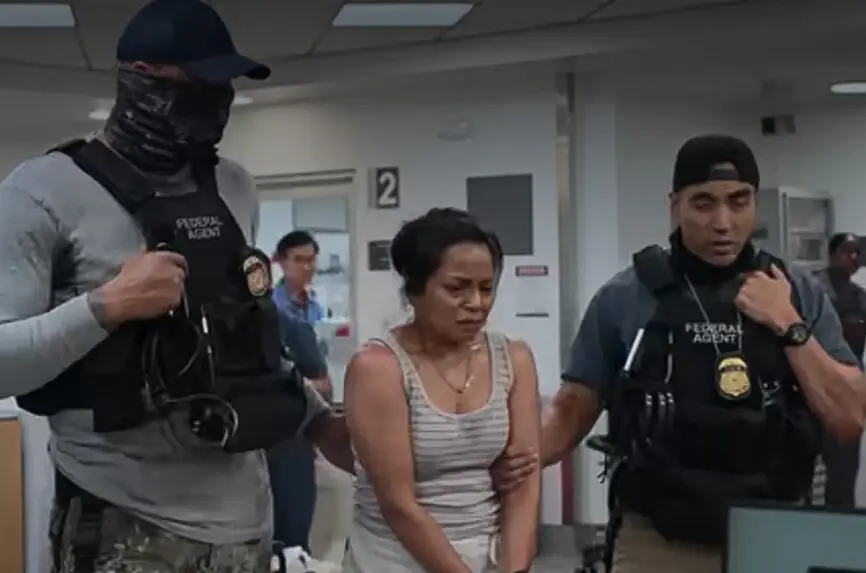
In a recent episode of The Pitt, the hit TV show, two ICE agents bring a patient into the ER who was apprehended in a raid at the restaurant where she works and injured her shoulder in a fall down stairs. While the episode gets a lot right, it has some shortcomings. And those shortcomings largely coincide with the inadequacies of our hospitals’ policies that coauthors and I analyzed in an editorial in AJOB.
The episode focuses on the tense interactions between the ICE agents and the physicians and nurses. The physicians immediately suspect that the patient didn’t just “fall” but was harmed by the agents. One physician wants to ask the patient’s permission to let her family know where she is. The ICE agents refuse, saying that the patient will get to make a phone call once she is discharged and processed by the detention system. A rotator cuff tear is diagnosed, and the patient is fitted with a sling and ready for discharge. Dr. Robby (Noah Wyle) vents his frustration at one of the ICE agents and urges him to get out of the ER as quickly as possible. This inflames the agent and leads to a disastrous altercation with one of the nurses, whom the agent arrests.
Before running through criticisms, it is important to note what the show got right, and in a big way: Fear spreads through the entire hospital because of the presence of the ICE agents. Patients exit the waiting room, and we learn that some of the healthcare professionals who have Temporary Protected Status –and therefore should have no fear of being detained or deported – have gone home because they didn’t feel safe. This is exactly what happens when ICE agents come into hospitals, and it is the main criticism of current U.S. immigration policy regarding healthcare.
Healthcare facilities used to be designated “sensitive locations” or “protected areas,” exempt from routine immigration enforcement, but President Trump eliminated that exemption when he took office in 2025. The health of our communities is jeopardized as patients opt out of needed care and some healthcare professionals become unavailable in an already shorthanded healthcare system.
But the episode missed several important details about hospital policies and procedures. The first thing to cause me to hit pause on my remote and start talking to my wife, who was watching with me, was the lack of regard for patient privacy. In the episode, the physicians immediately begin examining the patient and speculating to the ICE agents about a possible diagnosis. My experience is that physicians respect the privacy of patients when ICE brings them in. (All patients are covered by the privacy provisions of HIPAA.) Doctors often ask the ICE agents to step out of the room while they examine the patient. This can be a source of tension.
At many hospitals, the forensic patient policy, which governs the care of patients in the custody of any law enforcement agents, stipulates that security will always be contacted when such patients arrive and that security will brief the law enforcement agents on what is expected. In many hospitals, security is not summoned unless the ICE agents decline the request to step out of the room during the exam. Even then, security may not benefit the clinicians or the patients, and this is where real life gets more complicated than television.
Forensic patient policies are written with the sole goal of keeping hospital personnel safe from potentially dangerous criminals. Therefore, they usually require a hospital security officer (or a designated administrator) to tell law enforcement agents that they are required to keep eyes on the patient at all times and to shackle one or both arms of the patient to the bed. These policies usually include nothing about patients’ rights, such as privacy or medical decision-making. So, ICE agents routinely and understandably respond to requests by physicians to step out of the room during examinations by saying that it’s not what they were told the hospital policy is.
In the TV show, the clinicians don’t try to enforce patient privacy and confidentiality. In my experience, real-life clinicians usually do try to do this with patients brought in by ICE but are often undermined by their own hospital’s policies. As we noted in our recent AJOB editorial, forensic patient policies should be revised to include the patient’s privacy and rights that are enumerated in the federal law known as HIPAA (Health Insurance Portability and Accountability Act). The policies should also make clear that when a patient poses virtually no safety risk to staff, privacy during history taking and physical examination is expected.
Another false note in the episode is that Dr. Robby tries to discharge the patient as quickly as possible to end the disruption that the presence of ICE agents is causing. When I talk to physicians about treating patients who are in ICE custody, one of their most common questions is whether they can invoke conscientious objection rights to refuse to discharge the patient. In other words, they believe that they wouldn’t be meeting their duty to provide a safe discharge plan if they discharge the patient to a detention facility where care is likely to be inadequate and respect for the person’s well-being minimal. In real life, I would expect a patient brought in by ICE to be admitted to the hospital in an effort to guarantee her adequate care and safety for as long as possible.
The episode could have been made more realistic, but that would have complicated the story and perhaps made the TV show less compelling to watch. It would have introduced additional characters, such as hospital security and the general counsel. (The hospital attorneys are said to be tied up by a cyberattack in the episode – a lot happens in this place!) And the conflict would not simply have been between the clinicians and the ICE agents but also between the clinicians – who wish to respect patient privacy, assist the patient in contacting family, and maintain the patient in the facility as long as possible–and administrators – who are mainly concerned with protecting their staff by empowering the control of law enforcement officers over the patient, minimizing conflict, and seeking timely discharge.
As we might expect in a TV show, the ICE agents are simply the bad guys. My experience suggests more nuance -– that ICE agents are inexperienced and have no training in interacting with patients. If ICE agents are to respect patients’ rights, hospitals must set clear and appropriate expectations.
In sum, this episode of The Pitt does an excellent job in portraying the destructive reality of current immigration enforcement as it spreads a corrosive fear that undermines the efficacy and functioning of healthcare facilities. But it fails to capture the complicity of our hospitals in inadequately serving all patients in the custody of law enforcement. And it fails to capture the insult this failure is to the instincts and professionalism of clinicians.
Mark G. Kuczewski, PhD, HEC-C, is the Michael I. English, S.J. Professor of Medical Ethics and director of the Neiswanger Institute for Bioethics at the Stritch School of Medicine at Loyola University Chicago. He is a Hastings Center Fellow. @bioethxmark.bsky.social LinkedIn: (4) Mark Kuczewski | LinkedIn
[Photo: HBO Max]
See more Hastings Bioethics Forum essays on ethical issues related to immigrants and healthcare:
Honoring Alex Pretti’s Moral Courage and the Cost of Caring
Collecting Migrant Children’s DNA: A Troubling, but Predictable, Trend in the U.S.
Courage in Action: Why Bioethicists Must Advocate for Immigrant Patients











Great piece, Mark! Re: your observation that Dr. Robby’s effort to get the detained patient discharged quickly did not reflect the concerns and actions of real-world attendings, I suggest it may be consistent with Dr. Robby this season. Earlier in the season (meaning, earlier in the same shift for the characters), a patient was brought into the ED by a corrections officer. Other members of the team, including another attending, advocated for the patient to be admitted, based on their concerns about the patient’s injuries and overall condition. Dr. Robby’s position was that the patient was stable and should returned to the correctional facility. — we’ve done our job, we can’t save the world. Dr. Robby’s apparent burnout has been a theme of this season, so perhaps he is responding differently today than he once would have?
Dr. Kuczewski does an excellent job of describing the issues presented by the interaction between ICE and the medical system. It is both balanced and nuanced in a way that not only Hollywood, but our public discussions so often failed to do. Congratulations and thank you, Mark.
This is a sharp and intellectually stimulating analysis that brilliantly deconstructs the ‘bioethical architecture’ of patient advocacy and the critical importance of realistic representation in the evolution of modern medical-humanities strategy. I particularly appreciate the way the feature highlights how the shift from narrative sensationalism to high-impact, mission-aligned scrutiny of televised medical ethics serves as a vital bridge between the abstract mechanics of the seeker’s journey and a profound, lived experience of narrative agency—it’s a powerful reminder that the most resonant clinical environments are those that prioritize procedural integrity, ethical complexity, and the strategic interrogation of the stories that shape our shared progress. The insight into how these critical frameworks function as both a practical toolkit for the contemporary media observer and a sophisticated roadmap for the future of The Hastings Center community is a fantastic and deeply moving observation.
To better visualize how dramatic depictions of high-stakes medical crises can distort public understanding of real-world ethical dilemmas like emergency triaging and resource allocation, consider the following structural model:
Thank you for sharing such a clear and focused perspective on the intersection of media ethics, craft, and the seeker’s heart!