Bioethics Forum Essay
I’m the Man
Two singers prominent in the history of popular music proclaimed, “I’m the man”: Britain’s Joe Jackson and America’s 50 Cent. Each had a different meaning for this statement, and one has come to dominate our culture today.
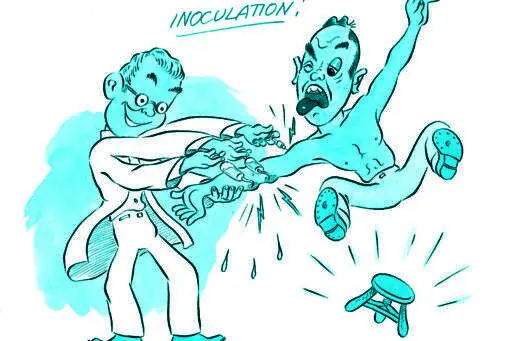
Jackson, in a 1979 hit, derided men who engaged in dishonest commercialism. The ‘man’ he hated was the conman or swindler always trying to sell you a phony watch or a hula hoop or vegetable chopper you don’t need, or to sell kids some outright dangerous item like a home chemistry set.
50 Cent disagreed with Jackson. His 2015 hit, “I’m the Man,” extolled making money by any means necessary including pimping, drug dealing, and robbing. Men owe no apologies, he rapped, for doing whatever is needed to get to the top.
A decade later we see 50 Cent’s vision dominating in many powerful circles. Some of the most esteemed men in our culture sell phony strength by using steroids, promote sketchy crypto schemes, advocate for kratom, and sell health potions that don’t work and sometimes harm. Raw, selfish capitalism is glorified and rewarded on Wall Street, in Silicon Valley, and in Washington. For a long time among many of the most elite, wealthy, and privileged members of society, Jeffrey Epstein exemplified desirable masculinity.
Why should we in bioethics care about what image of masculinity is being promoted in America or other cultures? There are many reasons.
Views of masculinity are closely tied to male health. Doctors are concerned about how the online emphasis on looksmaxxing is harming teenage boys’ mental health. When men are told they ought to be stoic, bottle up their feelings, and tough out stress and anxiety, they wind up sicker and miss out on support they would benefit from. When a politician is chided as unmanly and unfit for leadership for crying in public–as has happened to Tim Walz, John Boehner, Chuck Schumer, Adam Kinzinger, and Joe Biden, just to mention a few–it sends a lousy message about emotional health, and about leaders who take appropriate pride in the virtues of empathy and solicitude.
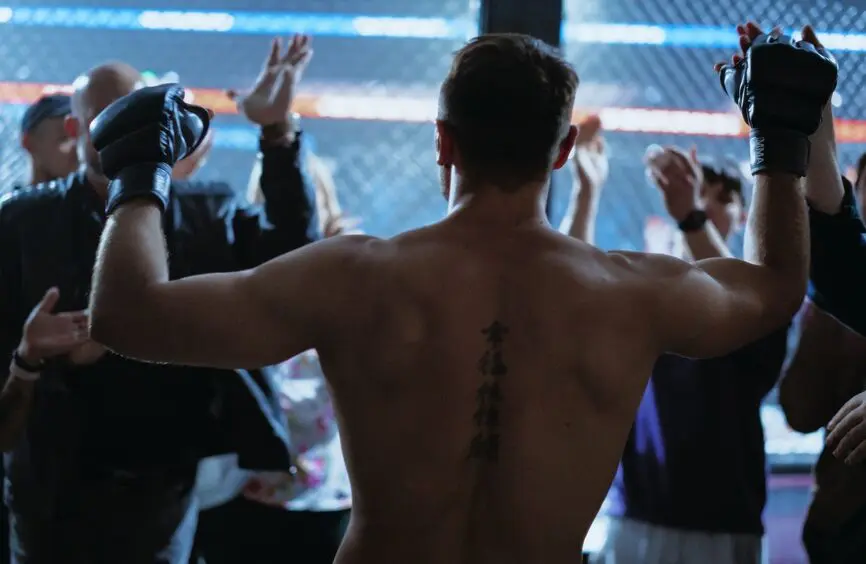
Manliness is defined these days by MAGA and MAHA as being swole and jacked. Role models come from phony sports like pro wrestling, vicious ones like UFC and professional slapping, and the recent steroid-infused enhanced games. When the President and his staff use AI to turn him into a muscle-bound fantasy in social media posts or promote testosterone replacement therapy for men young and old, then the culture begins to believe that only a muscular build, however constructed, is desirable as manly. The implications for inclusivity and authenticity are significant.
Extolling dominance, assertiveness, power, promiscuity, and violence may lead to abuse, sexual misconduct, repression, exclusion, and thwarting the opportunities of others. The toxic masculinity on display too often in American politics, business, social media, and sports means that men, and especially young men, see extreme caricatures of huge, domineering tough guys and a lack of positive, constructive uninflated male role models.
Toxic masculinity distorts the ethos of healthcare and the ethical perspective that men bring to policy formation. Toxic masculinity is fertile soil for the increasing turn among MAHA and tech bros toward an unapologetic eugenics.
The depiction of men and what the current culture deems manly will be with us long after Andrew Tate, David Goggins, and looksmaxxers become passe. Articulating an alternative view and promoting it as manly (and very cool) is an important bioethical project.
Bioethics must remain alert and identify toxic masculinity when it rears its ugly head in prescriptions about how boys and men ought to behave. And bioethics must continue to explore, articulate, and disseminate views of masculinity in healthcare and health policy that are inclusive, are scientifically grounded, foster possibilities, and are ethically just.
Arthur Caplan, PhD, is Professor Emeritus at NYU Grossman School of Medicine and a Hastings Center Fellow. @ArthurCaplan









Good analysis Art, and much needed.
tnx
Update on my essay: Pete Hegseth, Trump’s Pentagon chief, is on a mission to make America’s fighting men more ‘macho’. This includes blocking promotions for women, excluding transgender troops, prohibiting beards, plenty of exercise and getting rid of fat generals and admirals. His hysteria over the military becoming effeminate “pussies” ttps://www.theatlantic.com/health/2026/07/hegseth-testosterone-testing-military/687929/) has now led him to insist that many American soldiers need their testosterone levels tested and boosted. He wants to shoot troops with low numbers full of this hormone to improve “combat readiness.” One problem with a juiced army is that testosterone has risks and its benefits for encouraging effective forms of aggression in war are poorly understood and uncertain.
The US defense secretary has announced that male service members aged 30 and above will be checked to ensure they have the “right testosterone levels” to perform in the military at an optimal level. “By addressing these health markers early, we’re keeping you on the leading edge of lethality,” he said in a video posted on X. Military members found to have lower than normal levels of testosterone can “volunteer” for testosterone replacement therapy (TRT
Is there any persuasive evidence for Hegseth’s biochemistry enhancement program? No there isn’t. Testosterone isn’t linked with actual strength. A 2019 study found that men who received injected testosterone while engaged in intense exercise and a restricted diet — meant to mimic “strenuous military operations” — did not see gains in strength or endurance (https://theintercept.com/2026/07/25/pete-hegseth-testosterone-military-masculinity/). A 2022 follow-up found no increase in physical performance. Injecting testosterone can cause a reduction in natural production which can shrink the testicles and reduce sperm counts.
The hormone is risky enough to be classified as a controlled substance. Users in gyms know the downsides– acne, balding, breast tissue growth, impaired ability of the heart to pump blood, infertility, erectile dysfunction, mood swings and an increased risk of death.
Hegseth’s going full Mr. T macho as seen on TV’s ‘the A Team’ forty years ago simply ignores the evidence and equates chemistry with military proficiency. His willingness to play pharmacist while ignoring the risks is inexcusable. But it is also unforgiveable given that he is promoting a vision of manliness through chemistry that is increasingly irrelevant in warfare.
Not only is there no evidence that the U.S. military is in need of testosterone boosting, Hegseth’s line of thought is simply out of touch with modern warfare (https://www.theatlantic.com/national-security/2026/07/ukraine-war-drones-syrsky-zelensky/688045/). Todays’ conflicts, in the Ukraine, Iran, Armenia, Yemen, Sudan, Turkey and Russia, Gaza among others make clear, are relying on drones, missiles, robots, aircraft and autonomous weapons. Drones don’t care what your testosterone level is.
Soldiers need smarts not artificially swollen muscles or hair-trigger tempers to win battles. Men and women need to be able to use complex technology not perform pushups
Hegseth is not only arguing for evidence-free, dangerous drug enhancement he is fighting the wars of the last century. As todays soldiers manning AI drone posts far from the battlefield know, Hegseth’s love affair with last century’s drugged inflated phony machismo is dangerous and of no use at all.
Arthur Caplan Ph.D
Professor Emeritus
NYUGSOM