Bioethics Forum Essay
If AI Replaced God, What Could We Demand of It?
Pope Leo XIV’s encyclical, Magnifica humanitas: On Safeguarding the Human Person in the Time of Artificial Intelligence, declares that humanity faces “a pivotal choice.” Although AI is neither necessarily “antagonistic to humanity” nor “inherently evil,” it also cannot be morally neutral, and we humans must choose a path that safeguards us from its potential dangers and brings about a good outcome.
The choice is partly about regulation: We should opt for open intellectual property structures, for example, to help prevent the power of AI from becoming concentrated in the hands of a tiny ultrawealthy coterie. The choice is also partly about understanding: We should recognize that AI is not human and cannot replace what is valuable about humans, and that it is also not God and should not be seen as replacing God. To think of it that way is a form of idolatry.
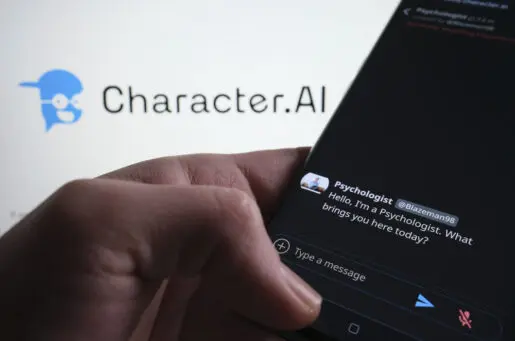
Silicon Valley was reportedly unimpressed. At AGI House, a kind of group home for software developers and engineers looking eagerly to the emergence of artificial general intelligence, one of the House’s founders said that the encyclical didn’t show an understanding of AI. For him, AI is becoming as God. AI “will achieve the outcomes that many religions claim their deities would be able to achieve,” he told a New York Times reporter. “It displaces God, and if it is not literally God, it is at least “something analogous to the Second Coming.”
This raises some questions about what we can demand of AI. If AI were effectively God, could we still call for choosing a path that will safeguard us from bad outcomes and promote good outcomes? Can we regulate God? Or is the AGI House view of AI a justification for dismissing any attempt at regulation?
To ponder this, we might consider an ancient puzzle posed by Plato, known today as the Euthyphro dilemma. Are good things good because God chooses them, or does God choose what is good because it is good? If it is impossible to conceive of God choosing otherwise, which Plato plainly supposes, then the conclusion must be that goodness is prior. It must be understood on its own, independent of God, and it must be pursued because of what it is, even by God.
Someone rooted in a faith tradition likely believes that the Euthyphro dilemma presents a false choice. It assumes that God and good can be understood independently when, in fact, the reason it’s impossible to think of God as choosing what is bad is that God and good are conceptually inextricable. They are the same thing, spun out in different ways.
But now, for funsies, see what happens if we swap out God for AI. Since AI isn’t quite yet there, let’s put the dilemma in the subjunctive mood: Would good things be good because AI chose them, or would AI choose what is good because it is good?
The first thing to note is that good and AI are very definitely independent of each other—so fully distinct that the dilemma doesn’t have the sneaky, slippery, gotcha quality of Plato’s original. Something would not become good just because AI chose it, and it’s not at all hard to imagine AI choosing what is not good. Why, in fact, would we suggest that AI ever would “choose what is good because it is good”? Why assume it would choose good at all? In some visions of the singularity (the hypothetical moment in the development of AI when it takes over its own design and becomes suddenly uncontrollable), it might be likelier to choose human subjugation or annihilation. In short, the Euthyphro dilemma doesn’t get any traction when it’s formulated as a pair of questions about AI.
The point for AI policy, of course, is that the good should be pursued. It should be pursued if AI is not God, as the Pope believes. It should be pursued even if AI is God, as the people at AGI House apparently believe. We need, as the Pope writes, “adequate regulatory tools capable of upholding justice and curbing the distorting effects of technological power.”
The rejoinder from AGI House is likely that AI is coming anyway, it cannot be stopped or constrained, and we should all get on the bandwagon and celebrate it. That response might be interpreted as seeking to simply end moral debate about AI, displacing moral questions in favor of sheer fiat. In effect: “Whatever. It’s gonna be how it’s gonna be.” But if the response is not just that AI is uncontrollable but also that it should be celebrated—it’s like the Second Coming, after all—then it brings to mind the first horn of the Euthyphro dilemma: The good will be what AI chooses. In effect: “Whatever it’s gonna be, it’s gonna be great.” The first response allows that the best practical response to AI’s emergence might be to run for the hills. The second tells us to drop what we’re doing and get ready for the rapture.
And here we really get to the practical nub of the matter, both for Plato in writing about religion and for the Pope in writing about AI: Blind acceptance is dangerous. Blind acceptance is one arm of the pivotal choice that the encyclical tells us we face. The contrast to acceptance is good regulation. The contrast to blindness is understanding. We need to think about our understanding of AI and the relationship of AI to our understandings of divinity and morality.
Gregory E. Kaebnick, PhD, is director of research at The Hastings Center for Bioethics and a Hastings Center Fellow.