Bioethics Forum Essay
Artificial Empathy: What AI Is Teaching Future Physicians About Caring
“I’m holding space for you.”
“What’s weighing on you today?”
“That sounds really difficult to navigate.”
I hear phrases like these constantly. They are polished, emotionally aware, and instantly recognizable as the language of empathy. But many of these expressions feel strangely hollow – not because the people saying them are insincere, but because the language itself often feels rehearsed. The language of empathy is also being shaped by AI – systems trained to produce emotionally resonant responses have made the vocabulary of care more optimized and less human.
Concerns about AI’s influence on human communication are already emerging in broader discourse. A recent Duke Chronicle column argued that optimized forms of language risk making us sound less human. In medicine, however, the consequences may extend beyond how we sound to how we learn to care.
As a hospital volunteer and an aspiring clinician, I’ve watched the increasing reliance on optimized communication unfold in real time. In the hallways of the hospital and in the nursing home where I spend my weekends, the language of care is moving toward a set of approved expressions, and in doing so is losing the specificity that made it responsive to the person and moment in front of it.
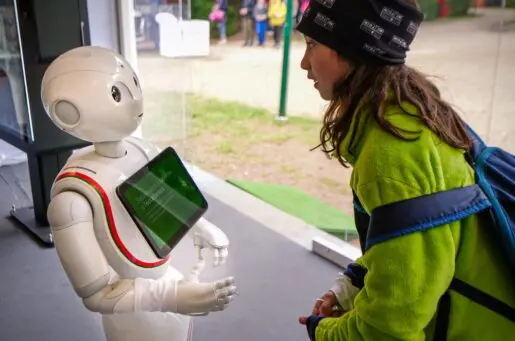
Artificial intelligence is making communication increasingly frictionless, including communication between clinicians and patients. Difficult emails are drafted through chatbots, condolences are polished by algorithms, and emotionally charged conversations are mediated through artificially generated language. Recently, after struggling to draft a difficult message to a patient following an emotionally heavy interaction as a hospital volunteer, I found myself instinctively opening ChatGPT for help. Within seconds, it generated something articulate, compassionate, and emotionally fluent. What unsettled me was not that the technology worked. It was how natural the substitution of my own words felt.
I worry that future healthcare professionals are increasingly being socialized into forms of communication that privilege emotional performance over genuine human presence. Long before artificial intelligence replaces physicians it may reshape the moral habits of the people training to become them.
Caring for patients requires more than technical competence. It requires the ability to tolerate silence, navigate ambiguity, and remain present in situations that cannot be solved efficiently. Some of the most meaningful moments I have witnessed in healthcare have not involved extraordinary medical interventions, but simple acts of presence: a physician sitting silently with a grieving family after delivering devastating news, a volunteer remaining beside a patient with dementia long after the conversation stopped making sense, or a clinician willing to admit uncertainty rather than rushing to fill silence with reassurance. These moments matter precisely because they are imperfect and emotionally difficult.
The danger is not just that artificial intelligence can simulate empathy convincingly. It is that we humans may begin to lose our ability to engage in authentic ways. When communication becomes increasingly frictionless and performative, our education systems risk producing healthcare professionals who can discuss suffering competently without knowing how to sit with it.
This shift is already visible in subtle ways in the classroom and on the quad. Students increasingly narrate emotional experiences through therapeutic language absorbed from social media rather than through personally developed reflection. Conversations about grief, loneliness, trauma, or moral uncertainty are often compressed into familiar scripts that are socially recognizable but emotionally flat. Empathy can begin to feel rehearsed, shaped less by genuine vulnerability than by familiarity with the right words.
Yet ethical development has never emerged from frictionless interaction. Moral reasoning is formed through difficult conversations, uncomfortable silences, and encounters with suffering that cannot be simplified or put in a box. In medicine specifically, the ability to tolerate emotional ambiguity is crucial. This concern is particularly important given that research has shown that empathy can decline during medical training. A physician may know exactly how to manage symptoms while still struggling to answer a patient asking whether continued treatment is even worth enduring. No algorithm can eliminate the discomfort of that moment, nor should it.
Our healthcare system is already consumed by efficiency. Physicians face constant institutional pressure to do more in less time. In these environments, human connection can easily become reduced to another task to complete quickly and correctly. Yet patients, particularly those confronting chronic illness, disability, aging, or death, often need something fundamentally inefficient from healthcare providers: time, attentiveness, emotional honesty, and the willingness to remain present even when no solution exists.
I am not arguing that artificial intelligence has no place in medicine. AI will continue to improve many aspects of healthcare delivery and reduce administrative burdens. But medicine cannot afford to lose its tolerance for difficult conversations and uncomfortable moments – moments that, often, matter the most to patients.
Medical education should, therefore, not simply teach students how to communicate efficiently. It should preserve opportunities for genuine human engagement. Future physicians need to practice sitting with grief, vulnerability, and suffering without immediately attempting to optimize or resolve them.
Ultimately, the question confronting us is not whether AI can become more human. It is whether we humans, immersed in increasingly artificial systems of communication and care, can preserve the qualities that make ethical medicine possible in the first place.
Daliya Rizvi is a senior at Duke University studying immuno-oncology and ethics. She has conducted bioethics-focused research affiliated with the Duke Department of Palliative Care and with a bioethics center in Karachi, Pakistan. She is also a longtime volunteer at the Duke Cancer Center.