Bioethics Forum Essay
Science Will Not Save the Abortion Pill
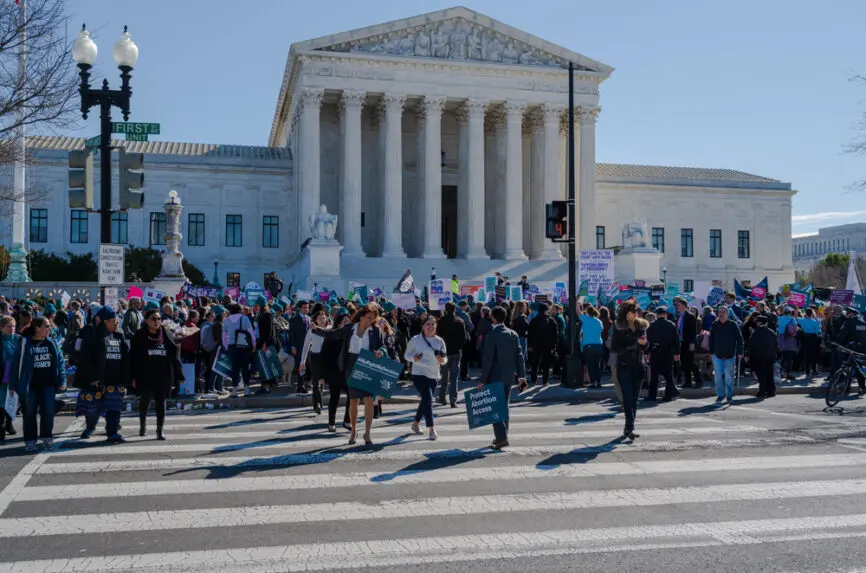
It feels like we were just here. The Supreme Court is gearing up to hear Louisiana v. FDA and re-consider the legal status of abortion pills mailed to states that ban abortion. My home state of Louisiana urges the Supreme Court to rule against abortion pills sent by mail. The appeals court in New Orleans sided with the Louisiana attorney general, who said that the state is “paying thousands in Medicaid bills for women harmed by mifepristone.” While we wait for the final decision on that case (likely next year), advocates of reproductive freedom are stuck in a state of déjà vu.
Just two years ago, the Supreme Court ruled against the antiabortion plaintiffs in a similar case. While many feel like the science is at stake, what’s really being threatened is the last lifeboat available to pregnant people in restrictive states.
The pro-choice lobby has placed its bet on the Food and Drug Administration, building out an evidence-based case to support expanded access. When antiabortion advocates claim that prescriptions over telehealth are dangerous for women, people who are pro-choice regularly point to studies that show comparable rates of safety and success to in-person distribution (replicated time and again). Despite the solidity of the science, the FDA is reviewing the rules for mifepristone, signaling that it may restrict mail-order delivery again.
The current pro-choice approach continues the strategy employed by Planned Parenthood before the fall of Roe, which aimed to depoliticize abortion by framing it as a mere medical procedure with scientific support. This way, any attacks on abortion would be attacks on healthcare and science. While science-based strategies have worked at the FDA, including in its support for mail-order delivery, science has been less influential in the courts, which have based decisions on questions of legal standing rather than scientific questions of safety and effectiveness.
In the case just two years ago (Food and Drug Administration v. Alliance for Hippocratic Medicine), the Supreme Court dismissed the argument from antiabortion doctors, ruling unanimously that they had no legal “standing to sue” from an injury caused by the FDA relaxing of in-person requirements. Since these doctors refused to prescribe abortion pills, they could not be injured by the FDA, regardless of whether mifepristone can be safely prescribed via telehealth.
My worry about the pro-choice strategy is shared by New York Times correspondents Elizabeth Dias and Lisa Lerner in The Fall of Roe. Side-stepping the politics of abortion to emphasize the science, they write, was both naive and dangerous. Abortion is not just a clinical procedure, but a highly stigmatized experience that deserves compassion, respect, and empathy. If we lose focus on the moral imperative of securing the legal right to abortion, then everything will be lost should the FDA restrict access to mifepristone.
The opponents of abortion say that Louisiana v. FDA is a lawsuit over science and safety, claiming mifepristone is bad for women’s health. Were it not for “the FDA’s lax policy,” according to the Susan B. Anthony Pro-Life America, the Louisiana plaintiff Rosalie Markezich would not have been pressured by her boyfriend to take the pills he’d mail-ordered from a California clinic. Susan B. Anthony Pro-Life America says that Markezich’s situation is not isolated from a large pattern of injury, pointing to dubious research on adverse effects (easily rebutted by the more robust studies I cited earlier).
Advocates of reproductive freedom should agree that what happened to Markezich was wrong, just not for the reasons stated by the Louisiana attorney general. The problem is not the FDA’s rule for mail-order delivery or that abortion pills are unsafe; it is reproductive coercion by a partner who violated her bodily autonomy. Markezich’s desire to continue the pregnancy should have been respected. The fault lies not with the FDA, but the man who manipulated Markezich into doing something with her body that she neither wanted nor agreed with.
For people trying to terminate a pregnancy, the situation is confusing, exacerbated by debates over the pills’ safety. The national battle over abortion has splintered access to surgical procedures. Medication abortion remains the only means of pregnancy termination potentially available throughout the U.S. New restrictions on the medication would drastically disrupt what has become the main method of abortion, especially in the 13 states with total bans.
The facts are not enough. In addition to using evidence, people who support the legal right to abortion must make the moral case for it—resisting stigma and highlighting the imperative of reproductive freedom for all. People in states with abortion bans stand to lose the last lawful means for reliably ending a pregnancy. Reproductive freedom requires access to the technology needed for people to live their lives on their terms. Without it many more pregnant people will find themselves in Markezich’s situation of reproductive coercion—but with the state rather than a manipulative boyfriend infringing on their freedom.
Chris ChoGlueck, PhD, is an advocate for reproductive equity from New Orleans. He is an associate professor of ethics at New Mexico Tech, where he teaches philosophy and gender studies to STEM students and runs ethics workshops for scientists. LinkedIn Christopher-choglueck, cchoglueck.bsky.social












Excellent essay. As a med student in Texas, this is something I think about a lot. Patients need more than our science, and as ethics and healthcare professionals we have a responsibility to articulate not only the evidence, but also the moral case for access to reproductive healthcare.