Bioethics Forum Essay
Why Be Ethical? It’s Good for Us
Why be ethical? Jonathan Moreno and Arthur Caplan have graciously re-opened this ancient conversation as they reflect on the moral callousness and vile behavior of a group of wealthy elites and others in power. We applaud their efforts and wish to add our own observations from a lifetime of ethics teaching and advising in a wide range of settings.
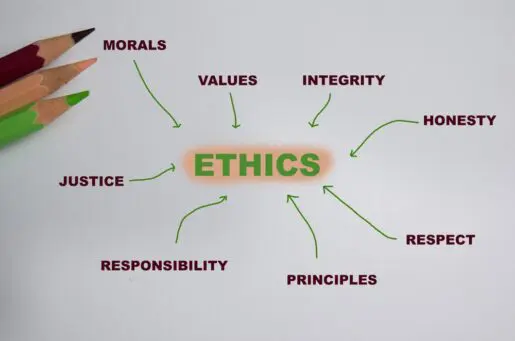
There is no one definitive response to the question “Why be ethical?” The answers are as varied as humans are. Some people find motivation in religious and spiritual traditions. Others reason their way to a justification for a moral life and still others rely on sentiments, feelings, and intuitions. Social and peer pressures to be good also count as avenues to goodness and integrity. All these pathways to being good have merit.
A second observation is that ethics is fragile. Adverse experiences and circumstances can easily lead us to adopt as heroes people who use others for their own ends, abuse public power, or value privilege over empathy, compassion, and dignity. There will always be some people who think they are too clever for ethics, that it’s a compromise born of weakness and cowardice.
Moreover, we often hold others to moral standards but make exceptions for ourselves. We may seek to hide our evil deeds, or to disguise or redefine them as somehow right. What does it tell us that virtually everyone wants to be seen, and to see themselves, as morally righteous? This is one of the reasons why those who espouse virtue ethics insist that being moral is more a lived practice than a set of principles to be logically applied.
In a consumerist culture endlessly bathing us in advertising, the dominant message is that we are little more than what we own or control. We may misinterpret having higher social status, better paying jobs, custom clothes, bigger houses, or more exotic vacations as signs that we are good. But this is moral confusion: Having wealth and power might be good for our egos but it has nothing to do with being good, being ethical. Espousing the crude zero-sum view of social dominance, and, thus, subjugating others for our own pleasure or profit, is destructive to our soul and brutal to our victims.
Central to understanding ethics is grasping that being good is a way of being happy — not in the superficial social sense of being rich or famous, but in a deep sense of experiencing integrity, or flourishing as a human being. Being good is what we are designed for. Evolutionary biology supports this insight. Empathy, cooperation, and reciprocity are important character traits for human survival. Our relationships, and our indebtedness to the people and circumstances that shape and support us, are essential to societal and individual meaning-making.
Finally, in the era of global warming and other 21st century crises, when choices reverberate and magnify into the future, the words of Jonas Salk are prescient: Being good now means being a good ancestor, extending our relationships into a world that can survive us .
It might seem simplistic, but it is nonetheless correct to say that being good is good for us. Every generation must be taught this. Every generation must also be taught to practice critical reflection. This important human capacity helps reinforce our own sense of morality amid challenge and change, enabling us to practice goodness until it becomes habitual. Choosing whether to be good in each new situation is a way of evading this habit; choosing instead how to be good, using the tools of ethics, is the essential human practice.
Larry R. Churchill, PhD, is Stahlman Professor of Medical Ethics Emeritus, Vanderbilt University Medical Center, and a Hastings Center Fellow.
Nancy M. P. King, JD, is Emeritus Professor of Social Sciences and Health Policy, Wake Forest University School of Medicine, and a Hastings Center Fellow.









Thanks for a critical reminder in today’s current environment of political abuse, using the “pulpet” of leadership to transform minds to think that power and dominance over the “other” is good, righteous and ethically supported. We need to awaken society to the essential “good” that is grounded in love, compassion, forgiveness and caring for ALL of us!!