Hastings Center News
The Bioethics of Surrogacy: Highlights of Our Event
Surrogacy is helping growing numbers of people fulfill their dream of becoming parents. But throughout its history, from “Baby M” in the 1980s to various cases in the news today, it has raised ethical and legal questions. Those questions were the focus of a Hastings webinar, “The Bioethics of Surrogacy: Looking Back and Ahead,” that took place online on November 11.
The webinar was the third in The Hastings Center’s series “Frontiers in the Ethics of Human Reproduction” and was presented with Retro Report, an award-winning independent, nonprofit news organization. Watch the recording here.
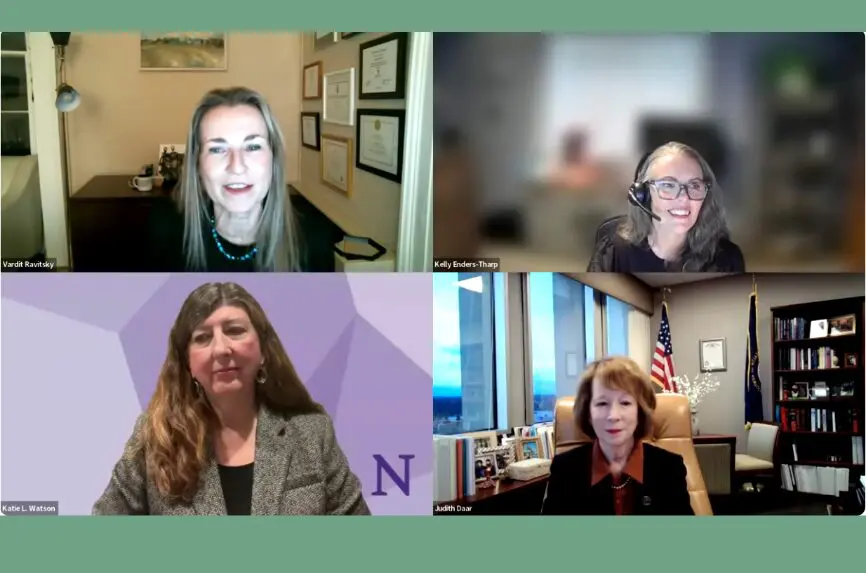
Hastings Center President Vardit Ravitsky moderated a discussion with legal experts and bioethicists Judith Daar and Katie Watson, and Kelly Enders-Tharp, an education and experience specialist a surrogacy agency and a former surrogate.
Ravitsky opened by pointing to two recent cases that have drawn heavy media attention. In one, a California couple commissioned several surrogates at once, resulting in more than 20 babies; some of the children were later found in abusive conditions. In the other, a surrogate and the intended parents disagreed over terminating a pregnancy after a prenatal diagnosis.
“Bad cases make bad law, and when we get that much media attention on complex cases, we’re concerned that the public gets the wrong impression,” said Ravitsky.
The panelists agreed that surrogacy has changed dramatically since the landmark Baby M case, but that oversight gaps remain.
Daar noted that the law has moved from largely prohibitory to largely permissive, with agencies minimally regulated. The panel also discussed how the Supreme Court’s Dobbs decision, which ended the Constitutional right to abortion, has made a surrogate’s location matter in disputes over ending a pregnancy. Watson raised a difficult question about compensation: if agencies screen out women who rely on Medicaid or public assistance to guard against financial motives, those who could most benefit from the payment may be the ones excluded. Enders-Tharp, a three-time surrogate, emphasized that ethical surrogacy depends on thorough screening, informed consent, and ongoing support. Fewer than 2% of women who apply at her agency make it through.