Bioethics Forum Essay
Bioethics is Not a Luxury in Ukraine
On the threshold of the fifth year of full-scale war, we find ourselves in a reality where human life is questioned every day. In a country where the enemy systematically devalues the very concept of dignity — killing combatants, torturing and abducting civilians, deporting children, deliberately destroying hospitals and schools — the question “Do we still need bioethics?” sounds almost absurd. And yet today I insist: Not only do we need bioethics; it is vital.
I am speaking about bioethics not as a set of academic concepts, not as a fashionable course in medical school, nor even as a professional requirement. I speak as a doctor who lives and works in Sumy, a frontline city, and who wakes up every morning to sounds of air raid sirens or explosions. In Sumy, bioethics has stopped being theory. It has become an instrument of survival — personal, professional, and societal.
When I was studying for my master’s and doctorate degrees in bioethics, I was captivated by philosophical foundations, principles of justice, respect for autonomy, and moral agency. All of this built what I came to see as the framework of medicine: a space of dignity, care, and compassion. I believed that bioethics was the natural language of anyone who works with human life.
Then the war came. In the first months, it seemed that all these theories shattered under artillery fire. Being a physician became difficult; being a bioethicist — absurd. But in the chaos, meaning began to emerge: bioethics does not disappear where law dies. On the contrary, it becomes the only system of coordinates that keeps a person from moral collapse.
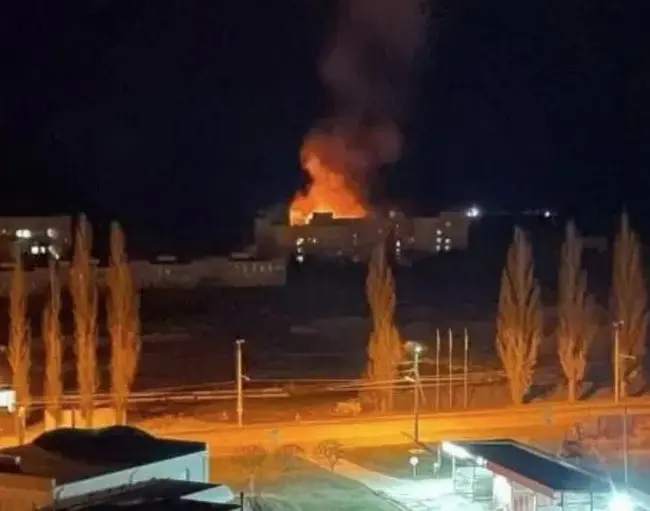
On March 18, 2025, a Russian drone strike on my hospital became a point of no return. Modern window frames were blown out entirely. A sanctuary — a place of saving lives and protecting humanity — was attacked. Yet in that moment, as we stood amid shards of glass and dust, pulling bedridden patients from their rooms, I understood: Bioethics is not what breaks; it’s what holds.
It manifests in actions:
– when a surgeon treats a prisoner of war without asking what side he fought on;
– when a nurse calms her patient before wiping her own blood from her arm;
– when a doctor refuses to hate so deeply that they stop seeing a human being in the other.
Bioethics is not a luxury of peace. In war it is a compass, showing people how to remain human when the world around us loses its humanity. And perhaps that is why Ukrainian physicians, scientists, and volunteers are not only treating the body of the country — they are sustaining its moral pulse.
Vladyslava Kachkovska, MD, PhD, DBe, is Associate Professor of Internal and Family Medicine at Sumy State University Medical Institute in Sumy, Ukraine. She is one of the 2025-2026 Stavros Niarchos Foundation (SNF) Scholars. The Stavros Niarchos Foundation (SNF) Global Bioethics Mentorship Program is one of The Hastings Center’s pathway programs.
[PHOTO: The author’s hospital during a drone strike in March 2025.]