Bioethics Forum Essay
The Multiplicity of Monsters: Frankenstein, Nuremberg, and Us
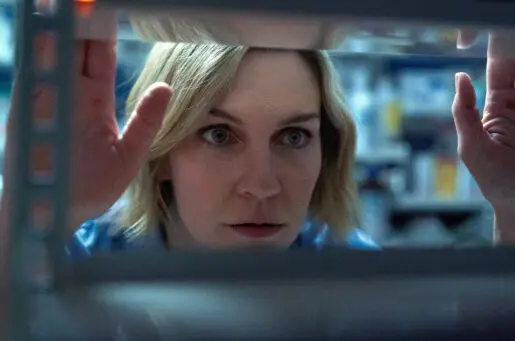
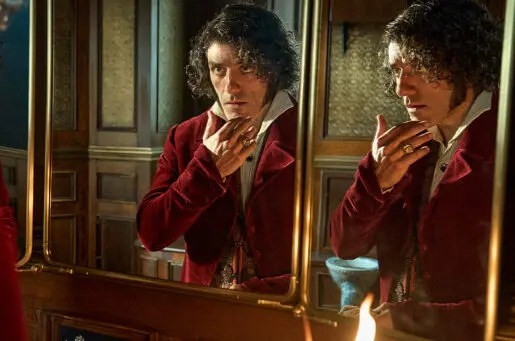
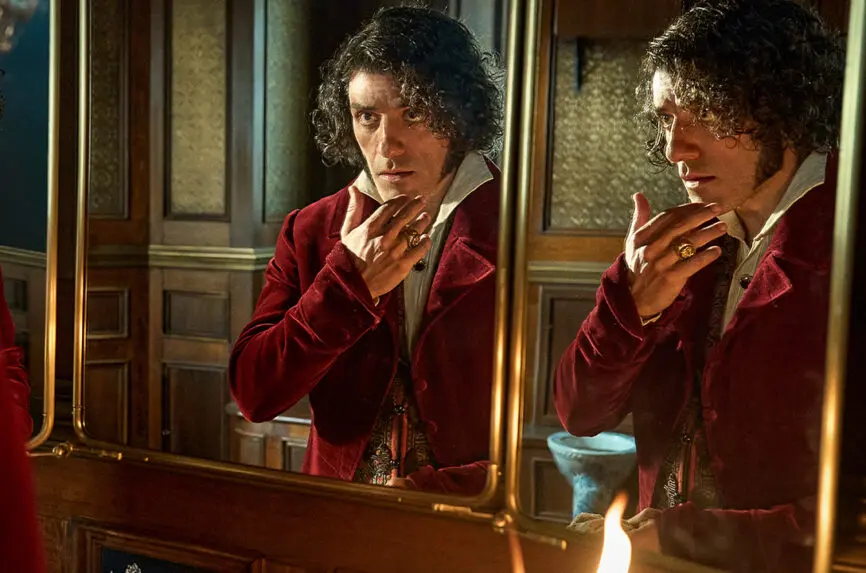
With its sharp, cold air and darker hours, the end of the year has a way of bringing me back to the movies. And bioethics is on the big screen this season with two canonical bioethical narratives: Guillermo del Toro’s Frankenstein and James Vanderbilt’s Nuremberg. Though at first glance starkly different—Frankenstein is fantastical, mythological, and fictional; Nuremberg is realist, historical, horrifyingly nonfiction—I found myself drawn to both the overt and subtle similarities between these films, and believe their retellings tell us something we need to hear now.
Both films are based on books: Mary Shelley’s Frankenstein; or, The Modern Prometheus and Jack El-Hai’s The Nazi and the Psychiatrist: Herman Göring, Dr. Douglas M. Kelley, and a Fatal Meeting of Minds at the End of WWII. Both films feature doctors. Victor Frankenstein is a gifted albeit disgraced physician in the film, who, as a young man, declares his intent to conquer death after his surgeon father fails to save his mother during childbirth—a backstory unique to this rendition. Nuremberg features psychiatrist Douglas M. Kelley, an American soldier who evaluated Nazi leaders as they waited to stand trial. In the film, Kelley is both disgusted by and drawn to his Nazi patients; he longs for notoriety and prominence, and he sees his task in part as a macabre opportunity he will later use to write a book. Like Frankenstein, Kelley is concerned with legacy and immortality. And in both films, questions of death run alongside questions of monstrosity and ultimately lead us to consider the ambiguity and multiplicity within our own selves.
As in much of medicine, the focus in these films is the line between life and death. In del Toro’s version of Frankenstein, Victor dies—he gets to die—at the end of the film, and it is constructed narratively as a gift. Victor is permitted the ending his creation desires. More than anything, the creature wants Victor to make him a companion—yet Victor refuses, and it is in this abhorrent loneliness that the creature desperately rages after his creator. At one point he allows Victor to blow him up. Yet through the alchemy of fantasy and the CGI of Hollywood, the creature regenerates, only to re-inhabit an isolation he believes worse than death. After Frankenstein dies, the creature literally walks off into the horizon, his impossibly large, dark frame against white snow and ice.
In this way, death is reimagined not as a defeat but as release and relief, at least for Victor, while immortality and endless regeneration are a curse. In the context of biomedicine, I am left considering the ways in which death is viewed as defeat: the responsibility a surgeon feels for a patient living after transplanting an organ; the way technology pushes forward our ability to reanimate the heart and lungs; the ethics consult in which the family asks for “everything,” though it will be exquisitely painful for the elderly patient with the poor prognosis. Yet at the same time, medicine has a dialogue with death. I am thinking of Henry Beecher and the Harvard Report on Brain Death, which laid the groundwork for redefining death in a way that would include neurological criteria.
Moreover, conversations about medicine’s role in death are at the forefront of debates over and policy recommendations for medical aid in dying, both in the United States and abroad. The film’s relationship with death also calls to mind transhumanism, including the idea that you can upload your brain (and perhaps even your metaphysical being) into a technology that may or may not be AI-informed and that will keep “you” alive longer than your body can. Death as defeat, death as relief, and death as cheatable are only three possibilities, and the narrative role that death takes is dependent on the particular circumstance.
One need only consider the difference between a patient at the end of a good, long life, dying at home with the help of hospice, and the irrevocable pain of parents and children in a pediatric oncology ward. Not only has death itself changed, but what death means is always changing, and is particular to every narrative. In the case of Victor Frankenstein, death may well be the only thing that makes him human in the face of his own monstrosity. “You’re the monster,” Victor’s dying brother tells him.
Embedded in this ambiguity and multiplicity around death is an ambiguity and multiplicity around monstrosity—an idea Nuremberg explores in great detail. Early in the film Kelley asks, “What if we could dissect evil? What if we could figure out what sets them [Nazis] apart?” When Kelley’s fellow soldier and translator asks from whom they are different, Kelley replies, “Us.” But as the film progresses, and as we the viewers know from history, that is not the right question. We see Kelley interact with Göring’s family, and Göring’s wife tells her daughter Kelley is her father’s “friend.” Indeed, we see Kelley develop not just a fascination but a kind of respect for the Reichsmarschall—a respect that is shattered at trial when real Holocaust footage is shown, making clear there are monstrous acts and monstrous deaths even amid complexity. Nuremberg is a history that demands revisiting so that we ask the right questions, which Kelley later understood not to be what makes them different, but rather, How did this happen?
Kelley develops a kind of allergy to exceptionalism—to the idea that the Nazis were especially evil and that their brand of cruelty is unattainable to the American sensibility. As if vigilance against fascism is less necessary here, where we, too, had internment camps and where we in bioethics often position the Nuremberg tribunal and code as evidence of an Other that we would never emulate. But atrocities, research and otherwise, are not only foreign affairs; the Belmont Report, for one, was written in response to what had already happened here in the U.S. “The basic approach to ethical conduct of research . . . was born in scandal and reared in protectionism,” Carol Levine famously observed. Thus, the thesis of the film, and the reminder we should take from it, is that we are not so very different—it could happen here. It could happen anywhere. In the film’s clear nod to modern day, Kelley asks Göring about the appeal of Hitler, and Göring replies, “He made us feel German again.” He continues: “Along comes a man who says, ‘We can reclaim our former glory.’ Would you not follow a man like this?”
We must be wary of easy narratives—of stories that reject complexity in favor of fixed categories. These films show us that we are both the monster and the creator; we have the power to terrorize and to liberate. Sometimes we go to the movies because they are novel and original. Sometimes we go because we need to be reminded of what we know but often forget: We are never just one thing.
Allison Coffelt, MS, MA, is a PhD student in bioethics at Saint Louis University and a lecturer in narrative medicine at Columbia University. LinkedIn Allison Coffelt
[Photo: Guillermo del Toro’s Frankenstein exhibit in London]