Sadler Scholars
The Hastings Center Sadler Scholars are a select group of advanced doctoral students interested in bioethics research careers. Admission is by application. All events are remote.
Stipends for new Sadler Scholars are provided by The Hastings Center for Bioethics through the Blair and Georgia Sadler Fund for Socially Just Health Policy. The Sadler Fund also supports expert advisors to this initiative, who serve as mentors to Sadler Scholars. The Center for ELSI Research and Analysis (CERA) provides support for programmatic collaboration with CERA’s ELSIhub, which provides special opportunities for Sadler Scholars with a research focus on the ethical, legal, and social implications of genomics.
Together, Sadler Scholars and mentors are building a community of next-generation bioethics researchers. It is an honor to welcome our new cohort each year.
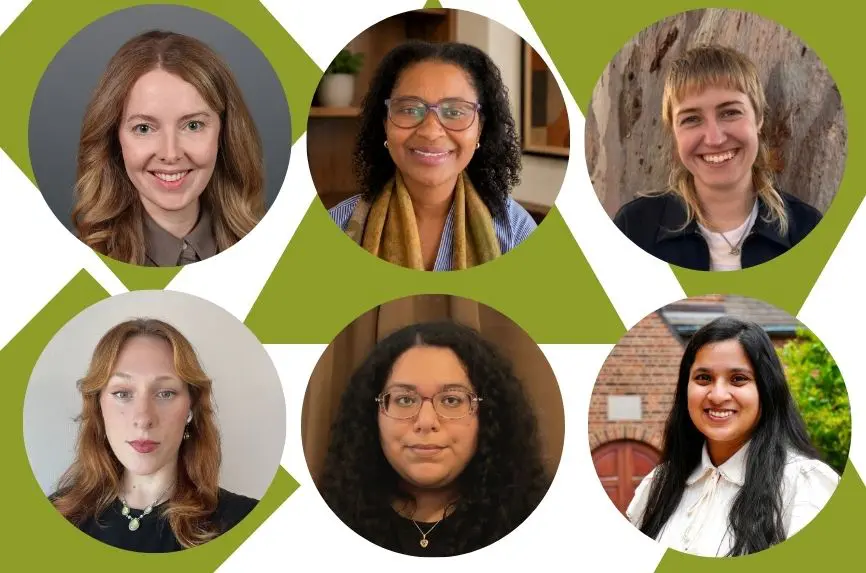
2026-27 Sadler Scholars
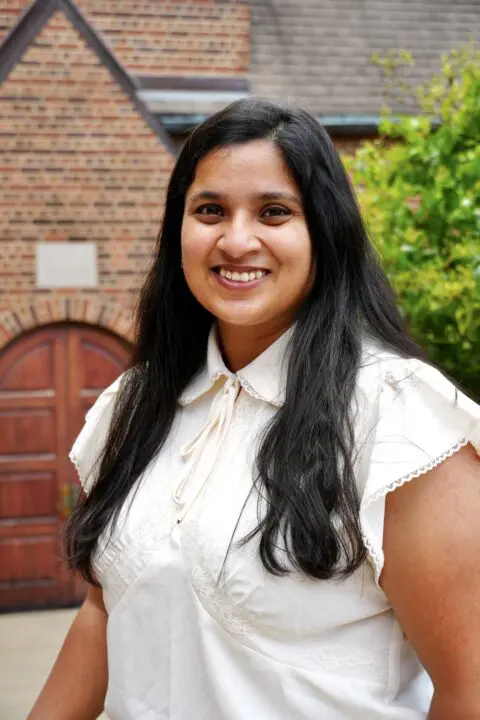
Soumita Mukherjee
Informatics, Pennsylvania State University
(PhD awarded August 2026)
Postdoctoral Research Associate, School of Information Sciences, University of Illinois Urbana-Champaign
About me: I am trained in law, in science and technology studies, and in ethics, and I publish on AI governance and policy. My work engages the ambiguity of allocating responsibility for harm to appropriate parties. Courts and regulators require harm to be visible and provable before anyone is held to account. Automated systems, now embedded across public services and clinical settings, produce harms that are diffuse, delayed, and hard to attribute, yet they shape who is treated, who is overlooked, and whose wellbeing counts. I study how institutions can be made answerable for harms of this kind.
My bioethics research interests: My research on clinical AI examines how current AI governance frameworks produce vulnerability by constructing fictions that transfer accountability from developers and institutions onto clinicians and patients. My goal is to build on this research to create better AI governance frameworks that ensure appropriate distribution of accountability for health AI tools.
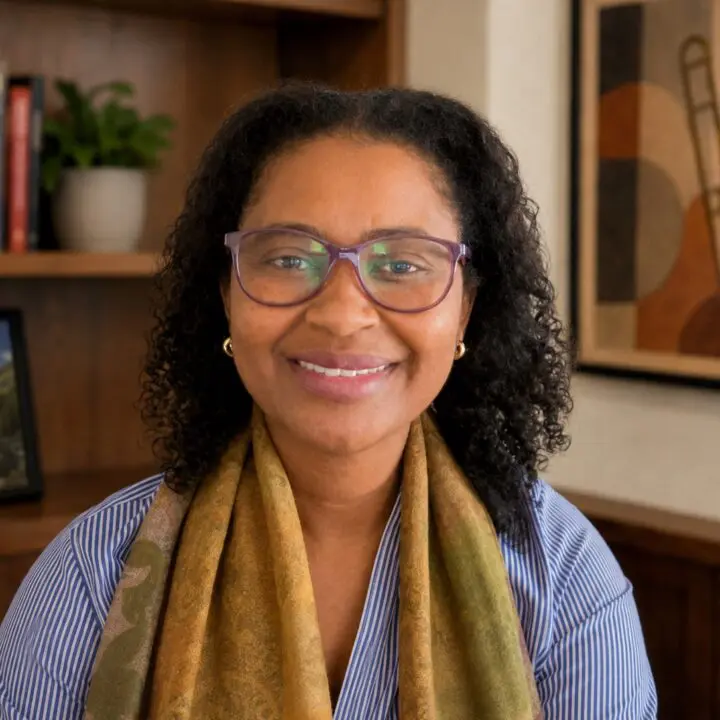
Tiffany North-Reid
Biomedical Data Science, Meharry Medical College
CERA Fellow
About me: I am a predoctoral fellow at NIH’s National Institute of Environmental Health Sciences. My research is driven by a fascination with how the environments in which we live, work, and move through the world shape health across the lifecourse—and how genomics, molecular, and computational approaches can help explain variations in health or disease outcomes. My previous experience working with an Environmental Influences on Child Health Outcomes (ECHO) cohort and supporting engagement efforts with the National Medical Association to increase participation in the All of Us Research Program has shaped my interest in who participates in, leads, and benefits from biomedical research.
My bioethics research interests: I am interested in exploring the ELSI of integrating genomic, molecular, environmental, and social data in biomedical research, with particular attention to representation, responsible data stewardship, and governance approaches that center community participation in decisions about data collection, access, and use.
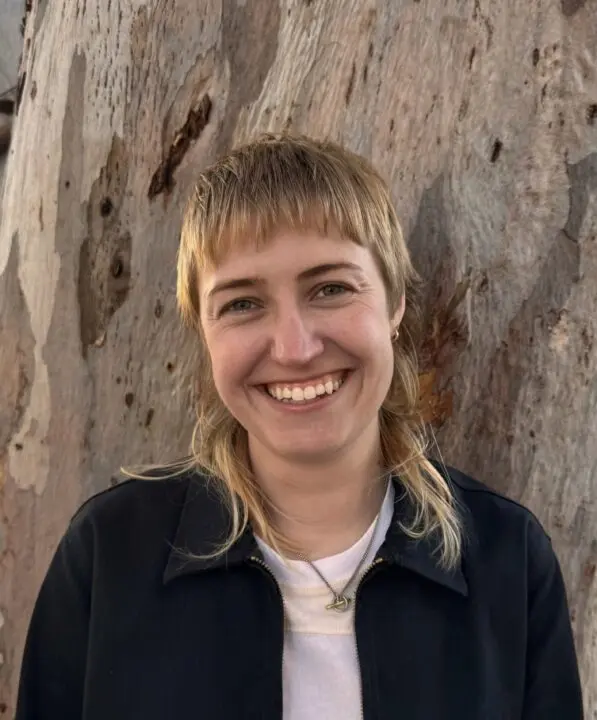
Caroline Petronis
Sociology, University of California San Diego
CERA Fellow
About me: I am a PhD candidate in Sociology at the University of California San Diego. I draw on sociology and science studies to explore ethical issues in how AI systems are reshaping diagnostic authority in medicine at multiple points of the diagnostic process. As a scholar, I aim to pursue an academic career in sociology and bioethics, investigating the intersections of medicine, technology, and expertise.
My bioethics research interests: My research investigates how AI systems are reshaping diagnostic expertise, blurring the boundary between diagnostic technology and medical expertise. I have a special interest in how genomic AI platforms affect the adjudication of expert opinions in case review meetings.
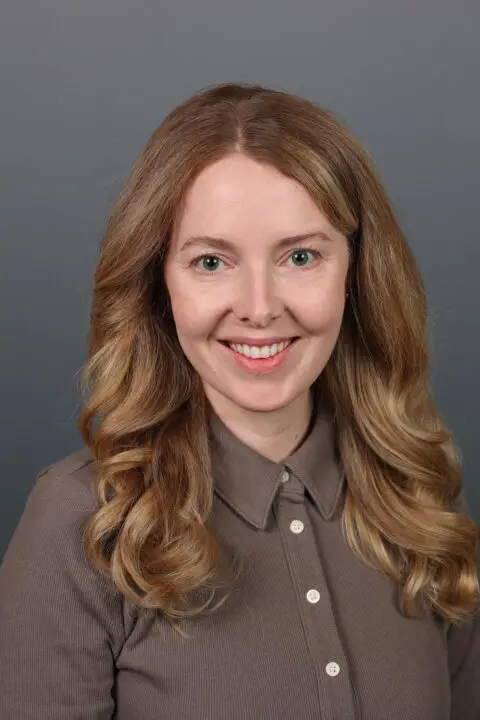
Renée Smiddy
Health Infrastructure and Learning Systems, University of Michigan
About me: I’m a Health Services Researcher and PhD candidate at the University of Michigan Medical School. I examine the financial and structural factors that shape health AI implementation to better understand how these technologies influence patients’ access to care, affordability, and perceptions of trust. I’m affiliated with the University of Michigan’s Trust, Innovation, and Ethics Research for Responsible AI (TIERRA) program.
My bioethics research interests: In the context of rapid health AI adoption, I want to better understand how these technologies introduce new ethical considerations as healthcare organizations deploy AI within revenue cycle management to increase efficiencies and cost savings. My research contributes to healthcare organizational ethics by studying whether these uses of AI risk reinforcing existing biases or worsen accessibility and affordability for vulnerable patient populations.
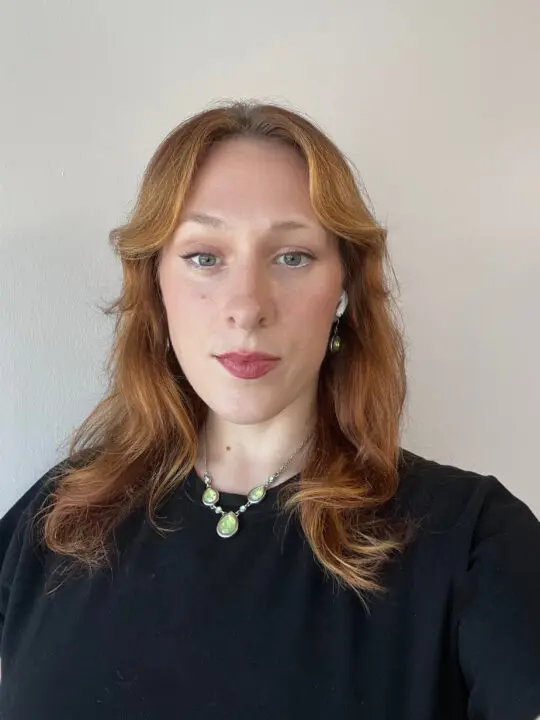
Jessica Townsend
Public Health, University of Alabama Birmingham
About me: I am a Clinical Research Coordinator and PhD student at the University of Alabama at Birmingham. My work spans qualitative research, community-based research, harm reduction, and community engagement, with direct experience working alongside vulnerable populations in infectious disease. As a scholar, I examine what happens when risk-reduction frameworks meet the people most often excluded from the systems designed to help them. My professional goal is to build ethically grounded, prevention-oriented AI tools for maternal/child health that prevent risks to communities from poorly designed systems and incorporate accountability into AI design and development.
My bioethics research interests: My research sits at the intersection of AI ethics, structural inequality, and healthcare delivery in underserved communities, with particular attention to maternal and child health populations in the Deep South. I examine predictive AI models in pediatric care, which can identify relationships between early childhood environmental exposures and long-term health outcomes. These AI models may support prevention and earlier intervention, but may translate family poverty and neighborhood conditions into individualized clinical risk classifications that suggest families are accountable for conditions they cannot change. My goal is to contribute to bioethical frameworks, governance structures, and community-centered design principles to ensure that predictive models are designed and used in ways that promote prevention without stigma, surveillance, or discriminatory interventions.

Lorenah Vásquez
Bioethics and Health Humanities, University of Texas Medical Branch-Galveston
About me: I am a PhD candidate in the Department of Bioethics and Health Humanities at UTMB. My research is shaped by the experiences of growing up in the Lower Rio Grande Valley, a border region in South Texas where migrant and seasonal farmworkers are a significant population. My goal is a career in bioethics, focusing on immigration and health, disability, and research ethics.
My bioethics research interests: I study how health has been understood among migrant farmworkers in the US, spanning from the Bracero Program (1942-62) to today. For health research to better capture farmworkers’ lived realities, we must look at agricultural labor itself, which often shapes how farmworkers perceive and experience health and disability, personally and over generations. This research draws on and contributes to many areas of bioethics, including care ethics, disability bioethics, immigrant health, and occupational health.