Bioethics Forum Essay
We Would Be Bragging, of Course: American Science on Tour
History can be instructive, especially in turbulent times. Fortunately, I have been spending a lot of time lingering in the past, researching a biography of Lewis Thomas. Thomas came to fame in the 1970’s when he wrote a regular column for The New England Journal of Medicine called “Notes of a Biology Watcher.” His essays were the most popular feature of the journal and were collected into two anthologies, The Lives of a Cell and The Medusa and the Snail. Both books won National Book Awards and made Thomas a public intellectual.
Pouring through the Lewis Thomas papers in Princeton’s Firestone Library is to engage in time travel back to mid-century America, a time that seems quite distant these days. But each trip back in time can be rewarding, reminding us of who we were, and what we might yet become as a nation.
Recently, I came across files from Thomas’s time as president of Memorial Sloan-Kettering Cancer which catalogued the distinguished visitors he hosted. I found an entry for Qian Xinzhong, the minister of public health of the People’s Republic of China, who made a U.S. visit in 1980 to foster collaboration between the two countries.
Minister Qian and his delegation’s cross-country itinerary made for a rather remarkable trip. Their American hosts pulled out all the stops and showcased the very best our country had to offer. You could say we were showing off, indeed, that we were bragging.
Their journey made me think of a “Notes of a Biology Watcher” column that Thomas had written, which, too, was about bragging. Inspired by an international initiative considering the prospects of extraterrestrial life, Thomas pondered what we might want to communicate if we found life out there. Lest our newfound celestial neighbors think less of us on our first meeting, he suggested that the safest bet would be to transmit music. And then, to crow a bit, he suggested that “he would vote for Bach, all of Bach, streamed out into space, over and over again.” And he added, “We would be bragging, of course, but it is surely excusable for us to put the best possible face on at the beginning of such an acquaintance.”
There was a whole lot of bragging going on in June of 1980, when Minister Qian made his grand tour of the United States. This was his first trip to America, and the Department of Health and Human Services wanted to make a good first impression. His itinerary glistened with the very best America and American medicine had to offer.
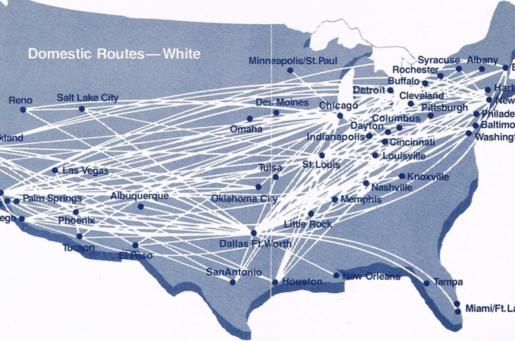
Consider their travel log. The delegation arrived in Honolulu, enjoyed a luau dinner hosted by the University of Hawaii School of Public Health, later meeting with the school’s dean and faculty. They toured Pearl Harbor and visited a Polynesian Cultural Center before departing for San Francisco and a visit to UCSF School of Medicine.
From there they traveled to Los Angeles and visited the UCLA School of Public Health, attending a reception at the home of Lester Breslow, the school’s dean. Breslow was a prominent physician who expanded the remit of public health beyond communicable diseases to lifestyle choices. From L.A., the delegation traveled to Alburquerque to visit an Indian Health Service facility and met with Emery A. Johnson. Johnson was the longest serving director of the Indian Health Service and an advocate for tribal health. Their academic discussions were complemented by a visit to a Pueblo Cultural Center.
They then left for Atlanta and the Centers for Disease Control and meetings with William C. Watson, its deputy director. Watson was a public health luminary who helped to get the CDC off the ground and did seminal work combating malaria. In recognition of his achievements, the CDC recognizes its most extraordinary employees with the William C. Watson Medal of Excellence. Watson and his close friend Bill Foege – who died in late January – were legendary figures at the CDC and were dubbed “the Two Bills.” Foege helped to eradicate smallpox, served as director of the CDC, and later of The Carter Center. Minister Qian was traveling in good company and meeting the very best our country had to offer. Before leaving Atlanta, the delegation received a briefing on the new technology of TV news “satellite transmission” at the headquarters of Cable News Network, aka CNN, which was founded at the start of the month.
Then on to Washington, D.C., where they met with the president of the American Red Cross and attended a dinner hosted by Patricia Roberts Harris, the first African-American woman to serve as head of Health Education and Welfare and subsequently, Health and Human Services. Donald S. Fredrickson, head of the National Institutes of Health and subsequently president of the Institute of Medicine of the National Academies of Sciences, hosted the group at the NIH, which included a tour of the Clinical Center. They received a briefing at the National Institute of Allergy and Infectious Disease. A concert of the Preservation Hall Jazz Band at Wolf Trap rounded out the evening. The next day the group returned to the NIH for additional briefings and a tour of the National Library of Medicine, the jewel in its crown.
Their time in D.C. was a star-studded assortment of health policy royalty. They enjoyed briefings by health economist and former Hastings Center Fellow Ruth Hanft, a dinner hosted by former Secretary of Health, Education, and Welfare Joseph A. Califano, who had met with Minister Qian in Beijing in 1979. Another dinner was put on by David Hamburg, president of the Institute of Medicine. They toured the White House and met with Frank Press, science advisor to the President, and had lunch with Surgeon General Julius Richmond, a pediatrician who is known for giving a head start to Head Start. All this, plus tours of the National Gallery of Art and Mount Vernon, and a bit of shopping at Tysons Corner Mall, presumably to demonstrate the advantages of consumer capitalism.
From the capital they left for Boston and had tours of Harvard Medical School and the School of Public Health and a dinner hosted by the director of Massachusetts General Hospital and the medical school dean. They ended up in New York, where Minister Qian met with Thomas, hospital leadership, andRobert Good, president of Sloan-Kettering Institute. Good won the Lasker Prize in 1970 for doing the first allogenic bone marrow transplant. Thomas would win his Lasker in 1989 as the celebrated “Poet Laureate of 20th Century Medicine.”
Of course, in bringing up their distinguished pedigrees, I am bragging. But so was the country. The Chinese Minister of Health’s road trip was a glittering assortment of legendary figures in mid-century medicine and the great institutions that sustained their effort. As a student of that era, I stand in awe of what the country had to offer by way of academic hospitality.
But I wonder, could we pull off a similar junket today? Beyond having to thaw Sino-American relations, a tour would reveal our national scientific dysfunction. Venerable organizations like the NIH, once the showcase of the world’s best science, have now been co-opted by pseudoscience. The current science advisor to the President is not a scientist and is the first presidential science advisor without a doctoral degree. Vaccines are under attack and measles is on the rise. Proud academic institutions like Harvard are now embroiled in litigation with a government that once underwrote its research mission. From coast to coast, the tenor has changed and we’d be hard pressed to impress.
Half a century later, who could have imagined this reversal? One can only hope that this is a cyclical and not permanent decline. This is not the first time we have faced challenges to science and the academy. As far back as 1822, Thomas Jefferson observed that, “the first obstacle to science in this country is that the means of promoting it are at the sole disposal of those who do not know it’s value.” And Minister Qian’s tour was not without its blemishes, which can only be understood through the lens of history. Their final gala was a dinner at the Metropolitan Museum of Art hosted by Arthur Sackler, of the controversial Sackler family, which would contribute to the opioid crisis. History is generally complicated but always instructive.
These are challenging times for science and the academy, but we can still hope that America will regain its bragging rights. But hope alone won’t be sufficient. It will take the freedom to be creative and the means to be our best selves. It will require standing up for truth in science and rebuilding the networks of scholarship necessary to sustain the effort. And it will take humility and patience.
The music will play again. It might not be Bach, but Copeland or Gershwin will do just fine.
Joseph J. Fins, MD, DHL (hc), DMSc (hc),MACP, FRCP, is the E. William Davis Jr. M.D. Professor of Medical Ethics, a professor of medicine, and chief of the division of medical ethics at Weill Cornell Medical College; Solomon Center Distinguished Scholar in Medicine, Bioethics and the Law at Yale Law School; and a member of the adjunct faculty at the Rockefeller University. He is a Hastings Center Fellow, chair of the Center’s board of trustees, and at work on a biography of Dr. Lewis Thomas.
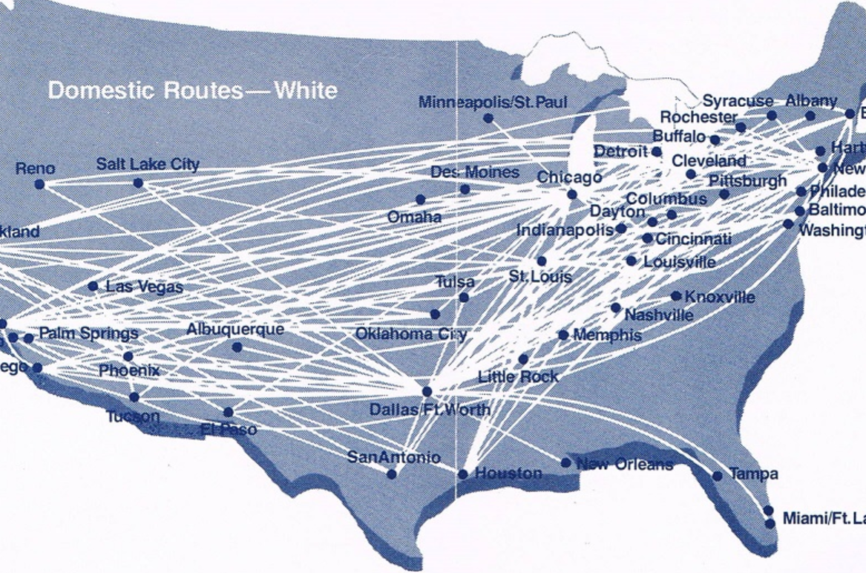
[Photo: American Airlines flight map, 1980]