Hastings Center News
Should We Use Science to Edit Human Life? Watch the Debate
Gene editing of human embryos could prevent serious genetic disease and improve quality of life in unprecedented ways. But it also raises major ethical concerns.
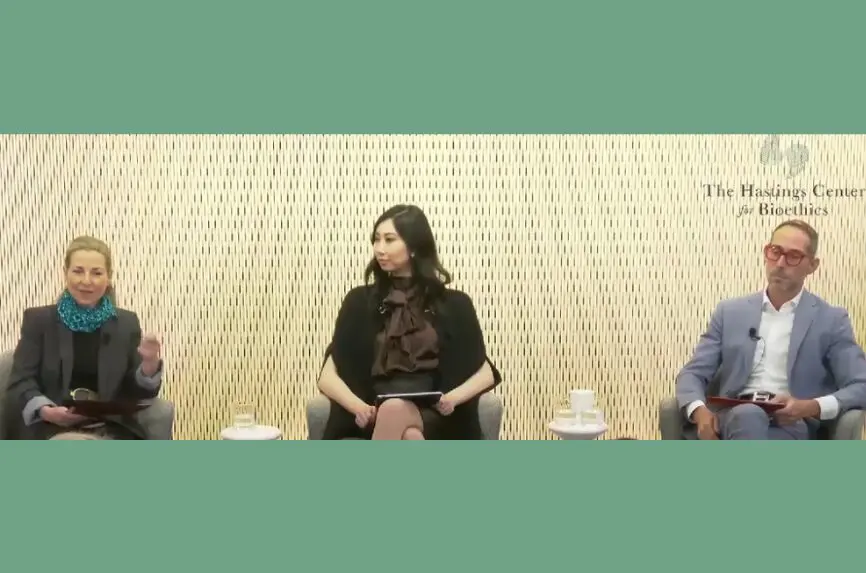
The Hastings Center for Bioethics hosted The Daniel Callahan Annual Program in New York City on April 23, a debate between Cathy Tie, CEO and founder of Origin Genomics, and I. Glenn Cohen, of Harvard Law School, moderated by Hastings Center President Vardit Ravitsky. The event was the second in the Hastings series “Frontiers in the Ethics of Human Reproduction.”
Points of Agreement
- The debaters agreed that embryo editing is not inherently unethical, that laboratory research on embryos can be ethically justified, and that clinical trials could be ethical under certain conditions.
- They agreed that if gene editing moves to clinical use, it should start by targeting serious diseases associated with a single gene, such as Huntington’s and Tay-Sachs.
Key Points of Disagreement
- What would ethically justify moving to clinical trials?
- What is the ethically required scope of governance and consensus?
- What are the possible implications for disability rights and some relevant communities?
The event was hosted by the Carnegie Council for Ethics in International Affairs, with support provided by the Jeanette Lappé Memorial Fund.