Hastings Center News
Bioethics Chats: James Giordano
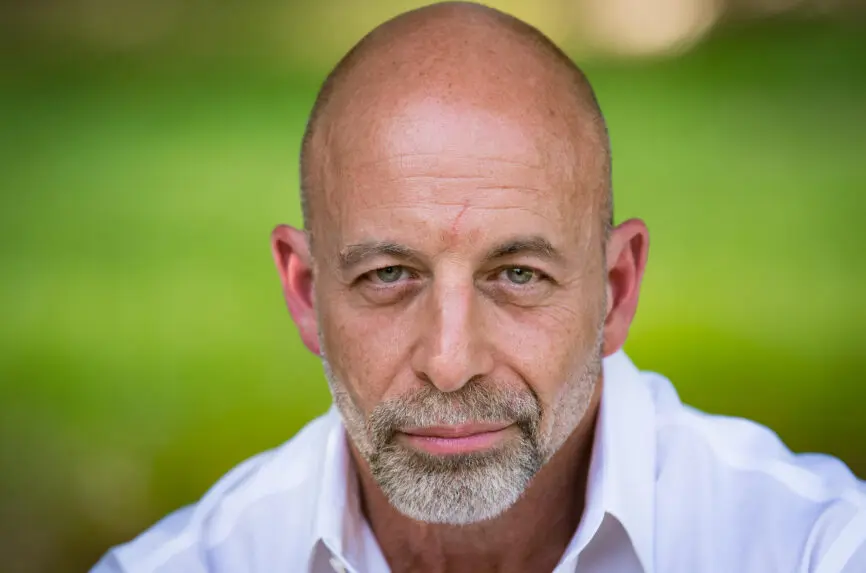
James Giordano, PhD, DPhil, is a Hastings Center Fellow who is internationally recognized for his research on the use of neurocognitive science and technology in military and intelligence operations. He is Professor Emeritus of Neurology, Biochemistry and Neuroethics at Georgetown University Medical Center and currently serves as the director of the Center for Disruptive Technologies and Future Warfare in the Institute for National Strategic Studies at the National Defense University. He has served in advisory roles to the Pentagon and Advanced Research Project Agency (DARPA), among other organizations.
He discusses the ethical questions raised by the convergence of AI and neuroscience, noting the “dual use” for therapy and for weapons of war. “Ethics requires courage to examine issues that others may avoid,” he says. His chat with Vardit Ravitsky has been edited for clarity.
What do you see as top challenges in bioethics today?
The convergence of artificial intelligence with a number of other scientific and technological methods poses evolving ethical challenges. Specific to my work, we’re seeing rapid development of AI-driven diagnostic tools and brain-computer interfaces that blur boundaries between therapeutic intervention and human enhancement. An example is the use of transcranial technologies and brain implants in preventive occupational medicine to make individuals more resilient to neurocognitive stress and injury.
The dual use of neuroscience is another bioethical issue that I am worried about. Advances in therapy can be repurposed for manipulation, coercion, or weaponization. Consider, for instance, how the development of new neurotropic drugs or neurotechnologies, such as directed sonic or electromagnetic energy, could be employed to influence human cognition, emotions, and behaviors, and how these might be used to control targeted individuals or groups. These possibilities demand urgent attention since they raise questions about access, equity, and privacy, as well as the impact on human rights. Neurotropic drugs and neurotechnologies with beneficial therapeutic effects could be withheld or otherwise controlled to create dependencies and leverage power.
What have you been working on recently?
My recent work has focused on the ethical implications of biotechnology and AI for public safety, national security, and the need to develop prudent guidelines and governance. This includes exploring the ethical dimensions of predictive neuroscience, such as the use of brain imaging, genetics, and AI to forecast cognitive patterns, behavioral tendencies, or susceptibility to manipulation. While predictive neuroscience could be used to optimize surveillance of individuals who are identified as posing threats to public safety, caution and strict oversight are warranted to avoid the risk of bias.
This work requires interdisciplinary collaboration to foster the depth and breadth of perspectives and the insight needed to develop responsible innovation pathways. We want governance that maximizes benefits while minimizing potential harms to individuals and societies. I’m very fortunate to be working with a great group of international colleagues on these projects.
What do you do for fun?
I’ve been a lifelong athlete, competing in wrestling, judo, in which I hold a second-degree black belt, and powerlifting. I teach judo and mixed martial arts classes and hit the gym four or five times a week religiously. I’ve been tinkering around on the piano since I was 5. I can’t read a lick of music, and play blues and jazz by ear, and still play club gigs from time to time. I’ve been a pilot for over 30 years, flew with the Navy and Marine Corps, and then was an airshow performer in an old L-17, a late-40s vintage airplane that I restored with some buddies I flew with. She was beautiful, but I sold her a few years ago and haven’t flown much since Covid.
I’ve also ridden motorcycles since I was 15 and love the pure visceral thrill of jumping on one of my Harleys and riding the twisties in the foothills of the Blue Ridge.
These days I restore vintage motorcycles and cars instead of airplanes; there’s something deeply satisfying about figuring out the quirks of these old machines, tweaking and buffing them up and bringing them back to life.
What advice do you have for early-career scholars?
I know it sounds a bit cliche, but perhaps the best advice I can offer is to follow your passions and never lose your sense of wonder. Ethics is a field that offers so much, and so it’s important and exciting to cultivate genuine interdisciplinarity. I’ve found that engagement with multiple fields and understanding their methodologies, vocabularies, and epistemological commitments yields great insight.
And don’t shy from controversial or uncomfortable questions; ethics requires courage to examine issues that others may avoid. Finally, maintain intellectual humility and flexibility. The fields we study evolve rapidly, and the positions we hold today may require revision tomorrow. So, stay curious, interested, and humble, my friends.