Bioethics Forum Essay
What Does an Imperial Hegemon Mean for Research Ethics?
When I began to write a book about bioethics and the rules-based international order, the idea that the world was facing the greatest geopolitical change since World War II was uncontroversial for those who were paying attention to such esoterica. For pretty much everyone else this claim was interesting when identified but paled in comparison to an ongoing global pandemic. During my first few presentations early in 2024 in places like Krakow, Singapore, and Vienna, audiences of academics acknowledged that this was a thing but maybe not an immediate thing.
It turned out to be a pretty immediate thing.
I think it’s fair to say that neither the experts nor the more casual observers (nor this writer), appreciated the Formula One-level acceleration that the still-young year 2026 has already witnessed. If Canadian Prime Minister Mark Carney’s remarks at the World Economic Forum weren’t quite at the historic scale of Winston Churchill’s “iron curtain” speech, they at least set down a marker that the Trump administration had turned U.S. foreign policy in the direction of an “imperial hegemon,” political science jargon for the explicit threat or use of overwhelming force to dominate those it chooses to.
None of the elements of modern bioethics are written in stone; they are the products of human decisions. Not all flowed simply from the post-World War II system; their roots are far deeper and have become vastly more formalized and globalized since then. In particular, various items in this jumble of norms gave people who called themselves bioethicists (sometimes self-appointed) an outsize measure of legitimacy as authorities about some very important matters related to the practice of medicine and the pursuit of knowledge.
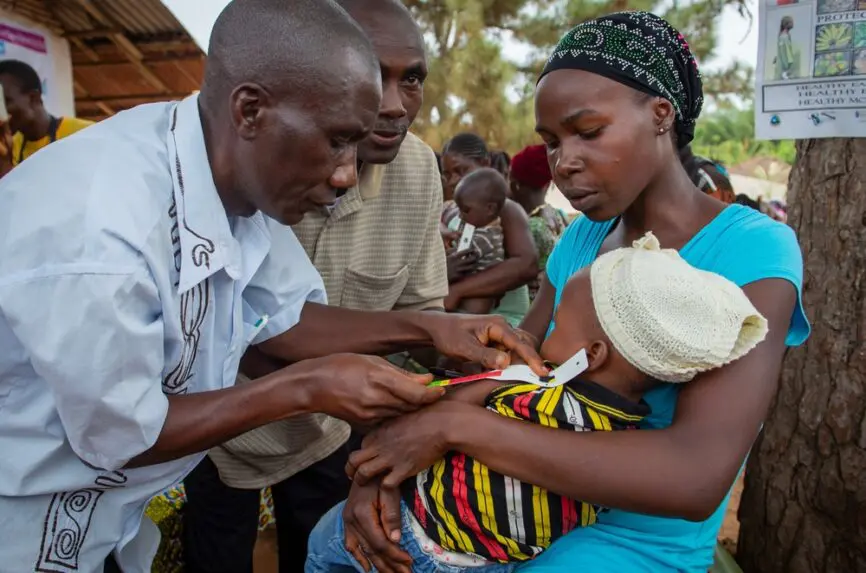
It turns out that what matters for bioethics in a diminished or radically revised global order also happens to matter a lot for the world. To take one current example of norms at risk, the U.S. Centers for Disease Control and Prevention has committed funding for a University of Southern Denmark study that involves withholding hepatitis B vaccine from infants in Guinea-Bissau; new questions have been raised about the research group’s previous work. If the study is ultimately approved (a question that is unsettled at the time of this writing), that would amount to exploiting a resource-poor setting in a way that would be unacceptable elsewhere. Nor can one imagine that a respectable IRB or research ethics committee would approve of such a protocol. Will the University of Southern Denmark explain its process for study approval? As of this writing it has not done so.
There is no denying that controversial studies in the developing world have been done before by developed world actors, but apt comparisons to the U.S. Public Health Service syphilis study, known as the Tuskegee study, would once have at least caused more embarrassment to the funding agency and the study group than appears to be the case under the current regime. A spokesperson for the U.S. Department of Health and Human Services has made statements indicating that the study will go forward, despite objections from the Africa CDC and reservations from the Guinea-Bissau government. This is the bioethics version of disrespect for state sovereignty when it is convenient for the imperial hegemon.
Ignored or not, global conventions for clinical trials at least have a history. Still more uncertainty lies ahead for emerging technologies. When gene-edited embryos became a public issue in 2017 Chinese authorities found a way to comply with international standards and apply severe sanctions for the scientists involved. But still more novel laboratory technologies like cerebral organoids await consensus. And the U.S. administration has already announced that it will not even pay attention to a U.N. study of standards for the implementation of artificial intelligence.
The exercise of hegemonic dominance can also stumble into vulnerability. U.S. withdrawal from the World Health Organization will have ripple effects that go beyond undermining the tracking of epidemic disease that threaten American lives. Global standards for vaccine research, development, and distribution already ran ragged during the pandemic as access to one vaccine or another was often determined by governmental arrangements of dubious integrity. We will never know how much money changed hands in the emergency.
What sources of bioethics authority will prevail in the next few years is a nice question that will depend a great deal on what kinds of geopolitical systems emerge. Take, for example, Prime Minister Carney’s proposal that “middle powers” unite in the service of their collective interests in opposition to the big powers. Countries that could fall into that category might not have a lot of guns, but they do have a lot of intellectual capital. Would they evolve their own systems for data sharing and rules about scientific practices? Would they prioritize studies that address local problems? Would they recruit and share experts who don’t feel comfortable serving global hegemons?
In the immortal words of Bette Davis, “Fasten your seatbelts. It’s going to be a bumpy night.”
Jonathan D. Moreno, PhD, is an Emeritus Professor at University of Pennsylvania and a fellow of the Hastings Center for Bioethics. His most recent book is Absolutely Essential: Bioethics and the Rules-Based International Order.











Beautifully written and educational. Scientific facts are under attack and established ethical standards are being pushed aside for personal gain, which will continue to cost lives globally. Future bioethics courses for emerging scientific leaders will highlight the ethics violations occurring in this moment. Then one day the world will need to reflect on how we allowed this to happen.